Synol Soap

Synol Soap


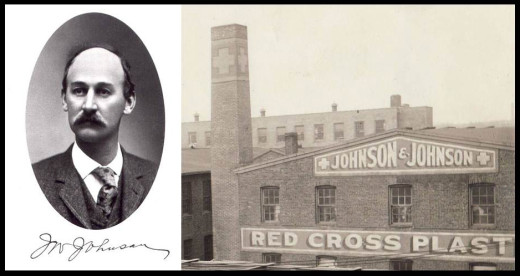
Most people today probably use an antibacterial soap at home.  In the Nineteen-teens, before the vaccine era, a germ-killing soap was even more of a necessity to help combat disease and keep people healthy.   Around 1900, U.S. doctors asked Johnson & Johnson to make a disinfectant soap that would help them wash their hands, disinfect instruments, and keep patients clean.  The Company’s response was Synol Soap. 

Johnson & Johnson frequently made products that served unmet needs in health care, such as the first First Aid products.  This philosophy went back to the Company’s first-ever commercial antiseptic surgical dressings in 1887

A 1914 edition of The Trained Nurse and Hospital Review, a monthly magazine for nurses, gives a history of Synol Soap.  

“About fourteen years ago various leaders in the profession requested Johnson & Johnson to establish a formula for an antiseptic soap. These doctors were daily handling all sorts of infections, and required a cleanser not only for themselves, but for their instruments and for their patients. The result was Synol Soap… While Synol is a soap usable just as any other soap, it has remarkable germ-killing powers. Surgeons and nurses use Synol on their own persons, as well as on their patients…”  (The Trained Nurse and Hospital Review, 1914, Boston Medical Library, courtesy of Google Books, page 388.)

 Synol Ad Showing Product in Use

Ad from 1915 Showing Synol Soap in Use

Synol Soap was a liquid antiseptic soap that was sold in a glass jar, and was later made in a solid cake form.  It was an effective disinfectant, germicide and deodorizer, and was mild enough so that it could be used like a regular soap.  It was partially derived from wood tar, which had antiseptic properties.  This gave it a strong smell — something the Company promoted as being indicative of Synol’s disinfecting power.   Ads for Synol in pharmacies urged not only physicians and nurses to use it, but also advised consumers to wash their hands, shampoo their hair, and clean and disinfect their homes with it.  The Johnson & Johnson Scientific Department (headed up by Fred Kilmer) issued health bulletins and circulars that talked about the importance of killing germs and improving public health, a lifelong concern of Kilmer’s.

RED CROSS MESSENGER Advertising

Through its trade publication THE RED CROSS MESSENGER, Johnson & Johnson alerted druggists about the importance of public health in fighting disease, urging them to cooperate with teachers and principals to teach hygiene in public schools.  The MESSENGER promoted “Clean Up Weeks” and designated March, April and May as “Clean-Up” season, in which people would thoroughly clean their houses and clear surrounding outdoor areas – anywhere germs could lurk — in order to help lessen the spread of infectious diseases brought by the warmer weather.  In 1915, Kilmer wrote:  “Disease germs hiding in neglected places about the homes and surroundings are ready to attack.”  (RCM Vol. VIII, March 1916, No’s. 9 & 10, p. 459.)  That sounds alarming to modern ears, but the Nineteen-teens saw persistent outbreaks of infectious diseases such as diphtheria, meningitis, measles, smallpox, typhoid fever, and more.  Continued public and private cleanliness and sanitation were the ways to combat these deadly diseases in the days before there were vaccinations and medications to treat them.

Lister's Fumigators

Lister’s Fumigators

Synol Soap was joined by an array of disease-fighting products such as Camphenol (another antiseptic and disinfectant product), Lister’s Fumigators and the JOHNSON’S® Fumigator.  Fumigators contained a variety of compounds with deodorizing or germ-killing capabilities.  When lighted, they produced a smoke that would help disinfect or remove odor in households or public buildings.  One fumigator, Mosquitoons, was designed to kill disease-carrying mosquitoes.  Its instructions said to light it and leave the house while it worked.  To emphasize that point, the Mosquitoons package showed a pyramid-shaped Mosquitoons fumigator at work in a bedroom, which was littered with painstakingly illustrated dead and dying mosquitoes.       

Mosquitoons Box and Fumigator

Although some of these products seem bizarre today, they played an important part in limiting the spread of infectious disease and protecting public health in the early 1900s.

 Products Used to Prevent the Spread of Flu and Diphtheria

Products Used to Prevent the Spread of Influenza and Diphtheria

This post was written by Margaret

Published in: Beginnings, Did You Know?, Early Products, Unusual Products | on October 17th, 2007 | 1 Comment »

You can leave a response, or trackback from your own site.

One Comment Leave a comment.

  1. On October 18, 2007 at 6:23 am www.topbloodpressureadvice.info » Synol Soap Said:

    [...] Margaret wrote a fantastic post today on “Synol Soap”Here’s ONLY a quick extractThat sounds alarming to modern ears, but the Nineteen-teens saw continued outbreaks of infectious diseases such as diphtheria, meningitis, measles, smallpox, typhoid fever, and more. Continued public and private cleanliness and … [...]

Leave a Comment

All comments will be reviewed before posting. Since this blog is about history, topics that don’t directly relate to the history of Johnson & Johnson and its operating companies won’t be posted. Product comments generally will not be posted unless they are of historical interest. Some unrelated issues may be forwarded to Johnson & Johnson folks for follow-up as appropriate. I’m also not going to post any comments that have inappropriate language…so be nice!