The Passing of the Torch

Johnson & Johnson circa 1890-1910

The year 1910 was a pivotal one for Johnson & Johnson. The company was doing well and growing, with a variety of product lines that included medicated plasters, sterile surgical dressings and sutures, but also products for women’s health, baby products, hygiene and personal care products, and more.   Robert Wood Johnson was president of the company, and with his brother James, Fred Kilmer and others, he steered the direction of Johnson & Johnson.  From the time he was five years old, Robert Wood Johnson’s eldest son Robert had accompanied his father to business meetings.   

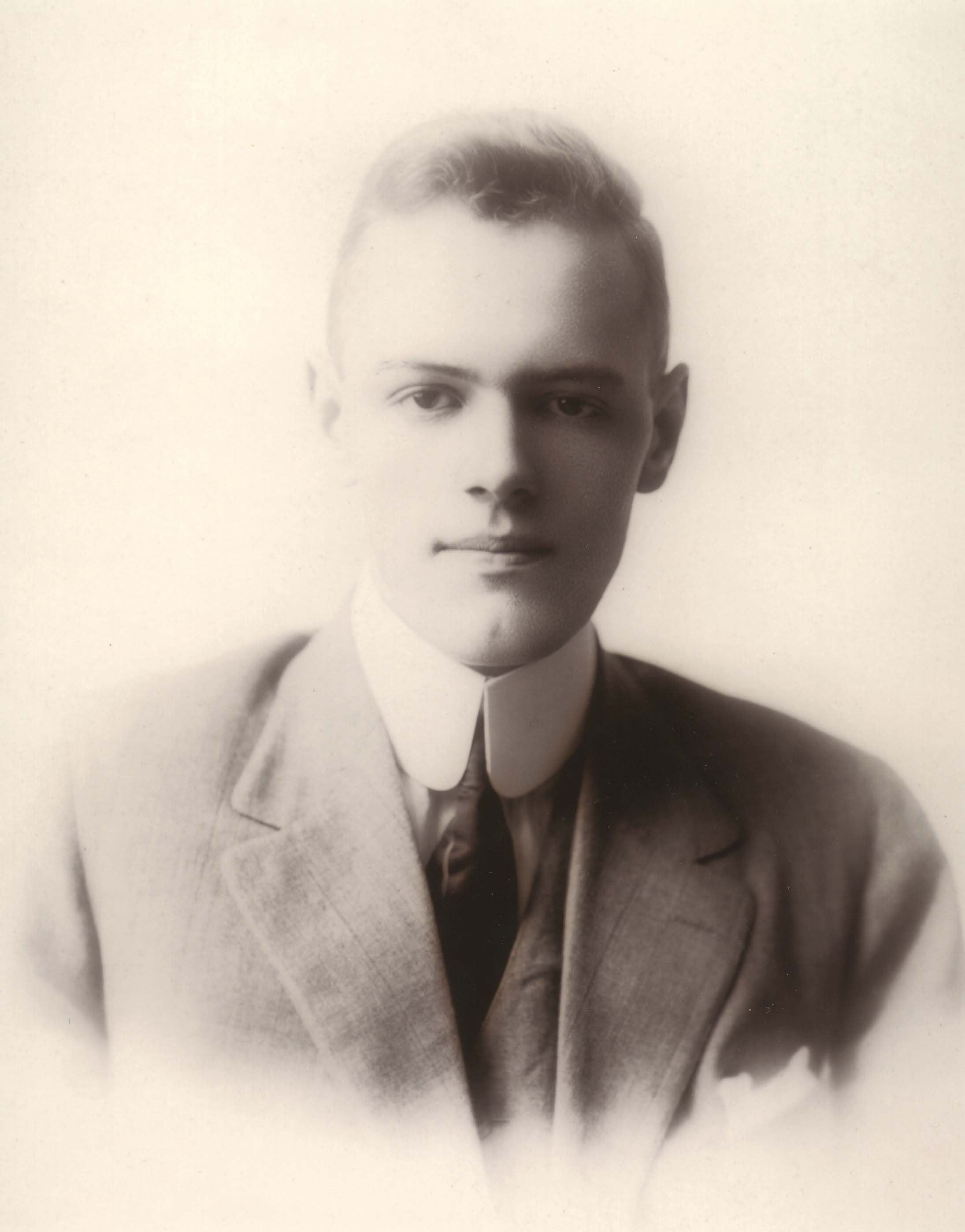
 Robert Wood Johnson, Jr. as a Child

Robert Wood Johnson, Jr. as a Child

Throughout his childhood, Robert had continued to visit his father’s factories and offices.  He had a serious temperament and was very interested in the workings of the business, the products made there, and the workers, and he asked a lot of questions that the staff was happy to answer. 

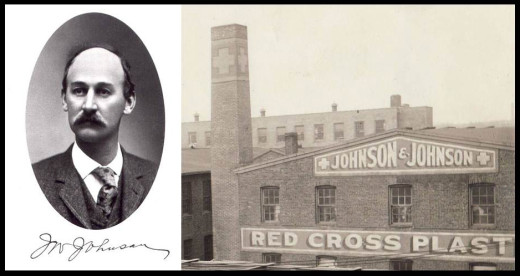
Company founder Robert Wood Johnson

Company Founder Robert Wood Johnson 

Robert Wood Johnson the first had always enjoyed good health, so it was unusual when he left work early on January 31, 1910, complaining of not feeling well.  When he felt too ill to attend the company’s annual stockholders meeting the following day, everyone knew that something was seriously wrong.  (Johnson & Johnson didn’t become a publicly traded company until 1944, so a stockholders meeting in those days consisted of the company’s top management.)  Johnson’s family physician visited Gray Terrace several times before announcing that Johnson had Bright’s Disease, a very serious illness affecting kidney function.  In 1910, there was no successful treatment for it.  Dr. Edward Gamaliel Janeway, one of the most prominent physicians of his day, and a friend of Johnson’s, was called in.  The Janeways – of Janeway and Carpender wallpaper plant fame — were another prominent New Brunswick family, and Dr. Janeway had been the consulting physician to Presidents Grover Cleveland and William McKinley.   Here’s a picture of Dr. Janeway and a little more information about him.  Unfortunately, all the two doctors could do was to make Johnson comfortable.  Robert Wood Johnson died eight days later, on February 7, leaving his wife, his children, and 2,500 employees.   His oldest son Robert was 16 years old.

Robert Wood Johnson the First

At Johnson & Johnson, the mood was gloomy.  Robert Wood Johnson the first was so vigorous, energetic and brimming with ideas that many were not convinced the company would continue to prosper without him.  However, Johnson had the foresight to ensure that, besides his brother James, the company had strong managers in place that could continue the business on the same trajectory.

Johnson’s funeral was held on February 9, and it was the largest funeral New Brunswick had seen.  Over 1,000 Johnson & Johnson employees gathered at the plant and walked to Gray Terrace to pay their respects – the line stretched from the Johnson house (which was at the corner of College Avenue and Hamilton Streets) all the way back to Johnson & Johnson.  Members of the city’s civic, religious and charitable organizations also paid their respects.   After the funeral service, mourners lined the mile-long route to Elmwood Cemetery.  When Johnson’s burial had to be delayed for a few days because the ground was frozen, it was a measure of the respect and loyalty he inspired that a group of his employees formed a 24-hour guard at the temporary vault.

Fred Kilmer wrote a tribute to Johnson that said, in part:

“ ‘When once convinced that an article which he could manufacture would save life and prevent suffering, he caused it to be manufactured and placed before the [medical] profession irrespective of any consideration of profit.’ ”  [Robert Wood Johnson, The Gentleman Rebel, by Lawrence G. Foster, p. 109]

If that philosophy about putting patients first sounds vaguely familiar, Johnson’s son Robert would later clarify many of the values he learned from his father into Our Credo

On February 18, the board of directors named James Wood Johnson as the company’s new president.   James, who was quieter and more laid-back than his brother, hastily assured employees that “My policy was my brother’s policy…My brother’s policy is my policy.”  [RWJ the Gentleman Rebel, p. 109]

 Robert Wood Johnson Jr. as a teenager

Robert Wood Johnson, Jr. Circa 1910

Johnson’s eldest son Robert struggled to adjust to his father’s death.  He returned to Rutgers Prep to complete his junior year and in the summer, asked if he could take a job at the factory.  Robert bonded with the workers, especially the Hungarian immigrants.  He was also living with his uncle James, his mother and siblings having left Gray Terrace for New York.  As a result, when Robert graduated from Rutgers Prep, he made a momentous decision:  instead of going to college, he wanted to join the company.

More on this story in my next post…

This post was written by Margaret

Published in: Beginnings, Landmarks, People | on September 14th, 2007 | 13 Comments »

You can leave a response, or trackback from your own site.

13 Comments Leave a comment.

  1. On June 6, 2008 at 11:20 am Rae Campbell Said:

    I have a photo of a Dr Johnson that my grandmother used to date in the 1940′s. My mother said it was Dr Johnson of Johnson and Johnson. My mother was thrilled when he bought her ( a 7 or 8 year old her 1st white fur coat, and I was wondering if you might know who he is……??

  2. On June 9, 2008 at 10:01 am Margaret Said:

    Rae,

    Do you have any more information on Dr. Johnson? He was not one of the Johnson family who founded the Company(in the 1940s, the two members of the Johnson family in Company management were Chairman General Robert Wood Johnson and his brother, Seward Johnson, neither of whom were doctors.) Coincidentally, there were, and still are, a number of Johnson & Johnson employees with the last name “Johnson” who are not related to the family who started the Company. Your Dr. Johnson most likely was one of those who shared the same name.

  3. On July 10, 2008 at 3:33 pm anita tobon Said:

    voy a hacer una representacion de su empresa :)
    todo bien
    chao.

  4. On October 5, 2008 at 12:20 pm ION PURCAREA Said:

    Great Company!
    I admire You.

  5. On December 11, 2008 at 6:34 am pat terry Said:

    Thanks for being a company built on integrity.

  6. On April 28, 2009 at 5:59 pm Scott Gunn Said:

    I am researching Johnson & Johnson for a mock crisis briefing at CSULB. We have to respond to the TSS breakout and scare from the early 1980′s. Thank you for this quick bio on the founders it will help me greatly in my establishment of logos for the company.

  7. On December 3, 2009 at 4:50 pm Randall Said:

    Very interesting history and I love the credo. Would also love to do work for Johnson & Johnson! We have a construction company in Lancaster, PA

  8. On January 6, 2010 at 8:06 pm keps Said:

    very nice reading about history of a good firm.

  9. On February 21, 2010 at 10:46 pm Cesar Hernandez Said:

    Great information on how the brothers succeeded. It’s always good to learn about history, especially about Johnson & Johnson.

  10. On April 14, 2010 at 12:05 am Machelle Averett Said:

    I stated researching my family tree and discovered that I am related to Robert Johnson. He is one of my great-great relatives. I Volunteer for the Geneological Society in Enterprise. So neat to find out who all you are kin to. As the family came to America, and settled in different areas. God Bless Everyone in the Company!!!!! As I have read many of the original employees where in fact kin to Mr. Johnson. Most were cousins, Neices and nefs.

  11. On May 12, 2010 at 5:29 pm Barb Gillispie Said:

    This is a very interesting story. I began reading because I had to write a short story on empathy for (A Fortunes’s top 10)company employees. I chose Johnson&Johnson because it is a well known name and now I’m glad I did! I didn’t plan on reading so much in to it, but now I plan to read further. A great family the Johnsons were/are. Employees too! Thank You.

  12. On June 6, 2010 at 7:26 pm Greg Riedi Said:

    I read with great interest the history of Johnson & Johnson, but the commercials I see on television just say the The Johnson Company…why is it abbreviated? Thank you.

  13. On June 8, 2010 at 1:34 pm Margaret Said:

    Hi Greg,
    Commercials for products from Johnson & Johnson operating companies would use the names or logos of the operating companies, and any corporate commercials would use Johnson & Johnson. It’s possible that the commercials you saw were for products made by the S.C. Johnson company, which is a separate company and not affiliated with Johnson & Johnson? (Confusingly, both companies were founded in 1886 by families named Johnson, but they have always been distinct and separate companies in different fields.)

    Regards,

    Margaret

Leave a Comment

All comments will be reviewed before posting. Since this blog is about history, topics that don’t directly relate to the history of Johnson & Johnson and its operating companies won’t be posted. Product comments generally will not be posted unless they are of historical interest. Some unrelated issues may be forwarded to Johnson & Johnson folks for follow-up as appropriate. I’m also not going to post any comments that have inappropriate language…so be nice!