The Birth of Our Baby Products
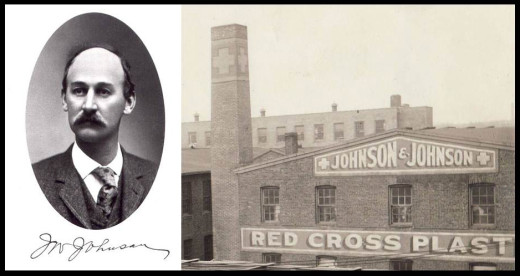
Some of the most enduring images from the history of Johnson & Johnson are those associated with the Company’s baby products. Generations of families have used these products to care for their children, and consumer identification with them has been so strong that, despite the depth and breadth of its product lines, the Company has enjoyed a longstanding reputation as “the Baby Company.” But the earliest products of Johnson & Johnson were medical products. So how did we become known as “the Baby Company?” Believe it or not, we owe it to the fact that Johnson & Johnson made medicated plasters. As mentioned in my previous post, some patients who used medicated plasters had complained to the Company that some of the plasters irritated their skin. In response, Scientific Director Fred Kilmer sent them small containers of Italian talc to soothe the irritation. These patients discovered that the talc also helped alleviate diaper rash, and they told the Company. As a result, JOHNSON’S® Baby Powder made its debut in 1893, went on the market in 1894, and the Company’s baby products business was born.
The earliest Baby Powder was in a metal tin with an orange and white label, which stated it was “For Toilet and Nursery.” JOHNSON’S® Baby Powder was a success, and the Company began expanding its line of baby products to include creams, soaps, and more. Over time, JOHNSON’S® Baby Powder, with its instantly recognizable scent, became one of the most familiar and trusted products in the world. This product, a result of consumer interaction with the Company — and the other baby products that followed –became a part of the baby care routines of new parents, who wrote in to Johnson & Johnson, happy to share their stories and happy occasions. Parents delighted in sending photographs of their babies holding the Baby Powder tins to the Company, which reciprocated by published the photos in its early newsletters.
With the rapid growth of advertising in the Nineteen-teens after World War I, Johnson & Johnson advertised Baby Powder with the largest ad campaign in its history, with the result that the powder – and the Company’s other baby products – really took off and became trusted components of the way families across the world cared for their children. The products, by their very use, promoted close interaction between parents and their babies, and became associated in people’s minds with the parent-infant bond. Here are some classic JOHNSON’S® Baby ads:
These products to care for babies were paralleled from the earliest days of the Company with maternity and obstetric kits that addressed the health of mothers and infants, as illustrated by Dr. Simpson’s Maternity Packet from the late 1800s.
These packets included obstetric sheets, cotton, umbilical tape, antiseptic soap, and more. One early kit, the JOHNSON’S® First Dressing Packet for Infants, included nitrate of silver, used to prevent infections in babies that could lead to blindness. At a time when most births occurred at home, these kits were designed to help make births safer for mothers and babies. The obstetric kits came with detailed instructions that mostly were centered on preventing infection in the baby and mother in the days after birth. Here’s an early example, a booklet from the Company titled “Hygiene in Maternity.”
The Company started from its earliest days with products to ensure the health and safety of babies and mothers at birth. But it was the addition of products to help parents care for their babies and young children that earned Johnson & Johnson the reputation as “The Baby Company.”
You can leave a response, or trackback from your own site.


Nicely done, Margaret! All the entries are wonderfully informative and concise. Great resource for Company history.
I am working on a book on the history of plastics in medicine and surgery. J&J has been and is a leader in medical plastics. I reviewed the web sites which are great. Can you direct me to more specific sources of historical information on plastics, plastic products and sterilization in J&J’s history?
Kenneth, I’m sorry to say I don’t have a more specific source of historical information on plastic, plastic products and sterilization in Johnson & Johnson history. However, I will be writing future posts about early sterilization methods for products, but will concentrate on the really old stuff — i.e., cotton, gauze, etc. in the 1800s and early 1900s.
This is a fantastic website.
I just stumbled here by googling for baby products but I just couldn’t stop reading.
Simply a perfect blog.
Kudos Margaret, keep it up.
Carl
I have a small 1/4 oz tin of Johnson’s baby powder. it is cream and has an orange border around the top and bottom of the tin. Underneath the Johnson and Johnson at the bottom it says New Brunswick NJ Chicago Ill. Could you tell me how old this is.
Thanks Jill
Hi Jill,
Without seeing a picture, it’s hard to give you a firm date, but based on what you’ve told me, your tin is most likely from perhaps the 1920s but more likely the 1930s. We have a reference in our archives that shows a JOHNSON’S® Baby Powder tin marked 1920 with the legend “New Brunswick, NJ, Chicago, ILL” on the bottom. In the early 1930s, we opened a manufacturing plant and distribution center in Chicago, so your tin would likely date from around that time. Incidentally, we packaged our Baby Powder in tins until 1963, when the product went to plastic packaging — with the exception of the years during World War II, when JOHNSON’S® Baby Powder was in cardboard packaging, because the metal in the tins was needed for the war effort.
Margaret
Hey Margaret,
Just ran into this post while browsing around, and loved it.
Are you related to Johnson & Johnson by any chance?
I find this to be one of the most fascinating blogs on the web! loving it!
My parents actually told me about the factory in Chicago, they had friends who worked there. I was absolutely shocked that this brand is so historic:)
Pearl
The inventor of J & J’s baby powder, Dr. Fred Kilmer, is a second cousin of actor Val Kilmer (Top Gun, Batman, The Saint, The Doors, etc.) Just a fun bit of trivia.
[...] is a nice story of how the baby business of Johnson and Johnson started. I am obviously kicked to know that the product I handle currently, [...]
I have a cream and orange 9 ounce baby powder tin. Underneath the Johnson and Johnson logo it says New Brunswick New Jersey. Can you tell me how old it is?
Hi Deborah,
Without seeing a picture of your tin, it’s hard to be exact, but it could potentially be from any time between the late 1800s and the early 1930s. Would you be able to email me a picture of your tin through the blog’s mailbox? The link to email is on the “About the Author” page. Thanks!
Margaret