Seabury & Johnson
Question: How many of the three Johnson & Johnson founders also started another successful company? Answer: Two of them.
Readers of Kilmer House know that Edward Mead Johnson left Johnson & Johnson in the 1890s to found another business, based on products to help infant digestion – a business that is still around today. But did you know that Company founder Robert Wood Johnson was a founding partner in another health and medical products business before Johnson & Johnson? That business was Seabury & Johnson. Here’s the story:

Wood & Tittamer, Poughkeepsie, New York
It was 1861, the American Civil War had just started, and sixteen-year-old Robert Wood Johnson, the future founder of Johnson & Johnson, was travelling from his home state of Pennsylvania to upstate New York. He was on his way to start his apprenticeship as a drug clerk in Wood & Tittamer, an apothecary shop in Poughkeepsie belonging to his mother’s family. The apprenticeship was his parents’ idea. Sylvester and Louisa Johnson already had two older sons serving with the Pennsylvania Volunteers and the Union Army, and they were reluctant to have a third son join the conflict. Their decision had far-reaching consequences, because Robert was so influenced by his pharmacy experience that he made health care his career.

The Place That Launched a Thousand Companies: A Retail Drug Store Interior in 1912
Toward the end of 1864, Robert completed his apprenticeship and got a job as an order clerk in a well-known wholesale drug firm, Rushton & Aspinwall, in lower Manhattan. In a perfect example of the fact that you can find ANYTHING online, here’s a picture of an actual Rushton & Aspinwall medicine bottle, if anyone’s interested.

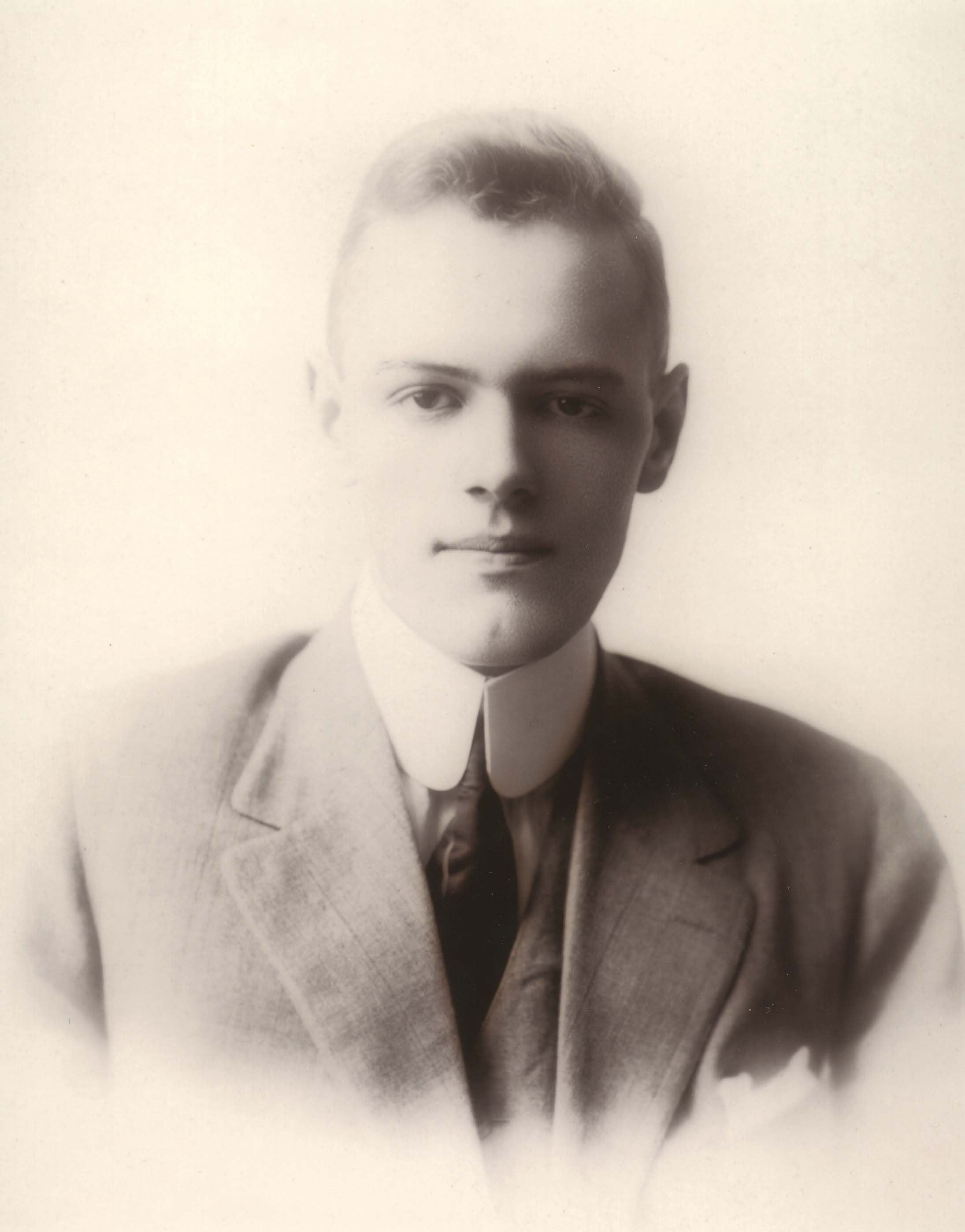
Robert Wood Johnson the first
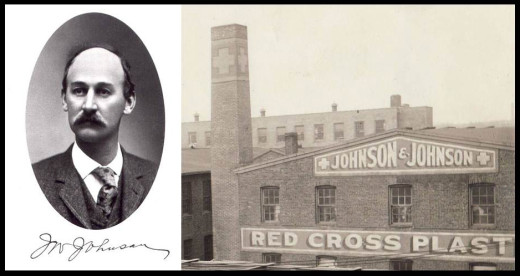
In 1868, after four years with Rushton & Aspinwall, Johnson set out on his own as a broker and importer of drugs and chemicals, with his own office (actually, it was just a desk) in a building on Platt Street. There he met slightly older fellow drug broker George J. Seabury, whose plans to become a physician had been interrupted by the Civil War. Seabury was from a prominent family and had served in one of New York’s regiments during the conflict. In 1873 George Seabury and Robert Wood Johnson decided to go into business together as…you guessed it…Seabury & Johnson. Seabury became president and Johnson was corporate secretary and sales manager.

George Seabury
As their business grew, it moved from Platt Street to South Brooklyn, and then to East Orange, New Jersey, where you can still visit the old Seabury & Johnson buildings, still standing today. Seabury & Johnson was by then a well-respected medical products business, known for the quality of its medicated plasters. In fact, one of the reasons Robert Wood Johnson was at the 1876 Centennial Exposition in Philadelphia — where he heard Sir Joseph Lister speak about antiseptic surgery — was because Seabury & Johnson was awarded a prize for its product exhibition there.

Seabury & Johnson Iodoform Gauze
Inspired by Lord Lister, Robert Wood Johnson wanted to mass-produce aseptic gauze and dressings for physicians to use in sterile surgery; George Seabury wanted to concentrate on expanding the Company’s existing medical plaster business instead.

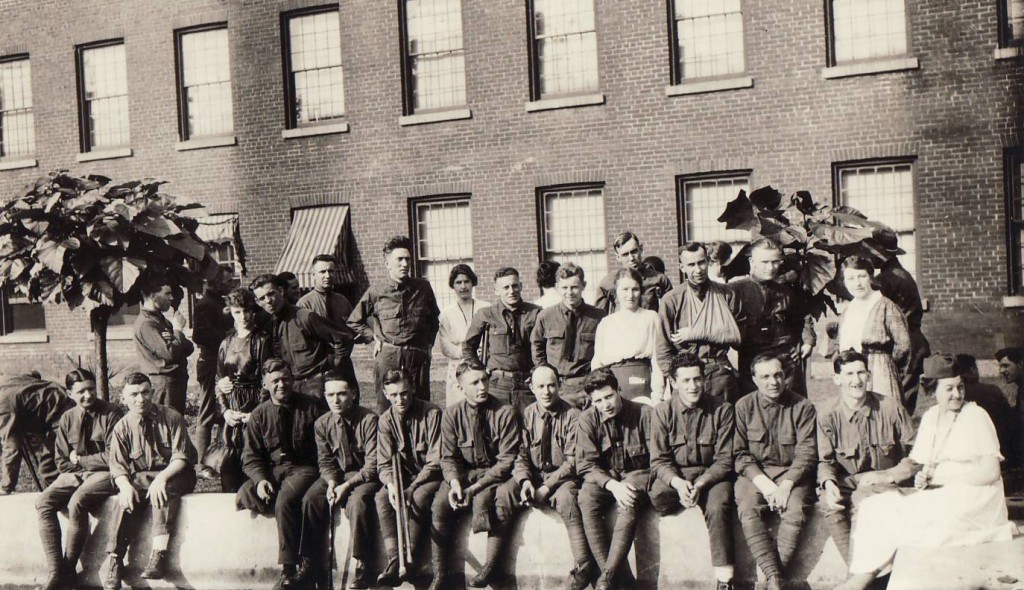
Seabury & Johnson Employees, East Orange, NJ, late 1800s
In 1876, George Seabury decided to bring his brother into the business, which led Robert Wood Johnson to hire two brothers, Edward Mead Johnson that same year and James Wood Johnson in 1878. (Since James Wood Johnson, with his engineering talents, went on to build machinery that solved many of the problems in medicated plaster manufacturing, this turned out to be an excellent decision.) Seabury had resigned himself to having two Johnson brothers join the business, but he became downright alarmed when he found out that Johnson actually had five brothers, and he worried that Johnson would hire the rest of them. (He didn’t.)

Both partners had strong ideas and opinions about the direction of the business, which led to some interesting discussions and later, to many colorful disagreements that were noted in the minutes of their meetings. As corporate secretary, Robert Wood Johnson kept the meeting minutes and he didn’t hesitate to put his own observations into the company’s official record. As time went on, Seabury frequently added his own comments to the margins when he disagreed with what Johnson had written. (Sample observation from Johnson: “ ‘Subject to usual discord!’ ” Sample comment from Seabury: “ ‘A deliberate lie, GJS.’ ”) [Robert Wood Johnson, The Gentleman Rebel, by Lawrence G. Foster, Lillian Press, 1999, p. 36-37]
In 1884 they started talking about breaking up the partnership, which alarmed Edward Mead Johnson enough to cause him to leave the business. In January of 1885, Seabury refused to attend the annual stockholder meeting. (There were only two stockholders: Seabury and Johnson.) On July 10 there was yet another disagreement about the way meeting minutes were being recorded. Finally, on July 18, 1885, Johnson resigned from the business and sold his half-interest to Seabury, the payment being made mostly by promissory notes. Johnson had to agree not to enter the medical products business for ten years. James Wood Johnson resigned the same day.

Artist’s rendition of the first Johnson & Johnson building
After unsuccessfully trying a typewriter manufacturing business, James Wood Johnson and Edward Mead Johnson decided to return to the medical products field. They started Johnson & Johnson in 1886 with 14 employees on the fourth floor of a former wallpaper factory in New Brunswick, New Jersey. It no doubt irked Seabury that the new company’s first employees were former Seabury & Johnson employees. George Seabury kept the name Seabury & Johnson and continued on. To relieve Seabury’s concerns about his brothers’ new firm, Robert Wood Johnson wrote a letter telling his siblings in clear terms that he would not in any way take part in their new business. Here’s a quote from his letter, as reproduced in Robert Wood Johnson: The Gentleman Rebel:
“I must again draw your attention to the fact that Seabury & Johnson are an old established house, have unlimited capital and credit and can at any moment sew up your small means. I strongly advise you to think the matter over very carefully before you engage in a contest with Seabury.
In order to fairly compete with them, you should have at least five times the capital you now have.
I will now add that if you determine to engage in the plaster business from this time on, I shall refuse to aid or assist you and will not even talk with you on the subject.” [Robert Wood Johnson: The Gentleman Rebel, by Lawrence G. Foster, Lillian Press, 1999, p. 42]
The agreement ending the partnership required George Seabury to make periodic payments to Robert Wood Johnson. By the summer of 1886, he had missed several payments and Johnson suggested that the agreement be ended. Seabury reluctantly agreed, and Johnson was now free to rejoin the medical products business. On September 23, 1886, Johnson published an open letter to the drug trade stating that he would be joining his brothers as the head of Johnson & Johnson and the rest was, as they say, history. Mead Johnson was so excited about it that he wrote to a Company salesman saying that his brother’s arrival would “create a boom” with the public. Robert Wood Johnson brought much-needed energy, enthusiasm, and capital to Johnson & Johnson, not to mention his considerable business skills. So important was Johnson’s letter that the Company reprinted it in the front of its first price list.

Reproduction of Robert Wood Johnson’s letter in first Johnson & Johnson price list
With Johnson & Johnson, Robert Wood Johnson was able to put in place his plans to manufacture and market the first mass produced sterile surgical dressings in the U.S., and to promote the practice of antiseptic surgery. The Company’s success and willingness to innovate allowed Johnson and his brothers to quickly expand their product lines well beyond the medicated plasters and sterile dressings and sutures that were among the first Johnson & Johnson products.
Although George Seabury is a footnote in Johnson & Johnson history, he is also known for writing a number of articles, pamphlets and books. These were mostly on fairly dry pharmaceutical, economic, and political subjects, with the exception of his most well-known work, “An Ode to Lake Bass.” (Apparently Seabury liked to fish.) You can read Seabury’s elaborately illustrated poem online in digitized book form here. And here’s a notice in the 1885-1886 edition of The Canadian Pharmaceutical Journal, announcing the dissolution of Robert Wood Johnson and George Seabury’s partnership.
And finally, there’s an odd coincidence, for anyone who’s noticed while reading this post: every firm that Robert Wood Johnson either worked for or started has had an ampersand in its name – a tradition that we are proud to carry forward at Johnson & Johnson!
Thanks to Lawrence G. Foster for his extensive research into Seabury & Johnson history, in his book Robert Wood Johnson: The Gentleman Rebel.
You can leave a response, or trackback from your own site.
It is very intresting and inspring story
Dear sir,
It is really nice to read in my igoogle set up your stories about Robert Wood Johnson, and how he went about setting up this great company I have worked in for the past 9 years. It is a privilege to be a small part of the history of entrepreneurship and gentlemanship. Values he held so dearly are the cornerstone to one of the reasons why I keep working here. Thanks a lot for reminding me on a weekly basis. Best regards.
Margaret;
Not only are your stories interesting, they are well written too. Many thanks for your posts. Is there yet another story to be told here concerning Sir Joseph Lister, his product Listerine and it coming into the portfolio of J&J products?
Rick,
LISTERINE®, like many other products, was named in honor of Sir Joseph Lister but not invented by him. While it did start its life as a surgical disinfectant, LISTERINE® wasn’t actually invented or formulated by Lister himself. It was invented by Dr. Joseph Lawrence in St. Louis, Missouri in 1879. Lawrence named the product in honor of Lister. Here’s a post about the history of LISTERINE®: http://www.kilmerhouse.com/?p=311
And stay tuned for an upcoming post about the connection between LISTERINE® and one of the inventors of the electric guitar.
Margaret