Archive for September, 2007

Seward Johnson and the Submarine Chaser

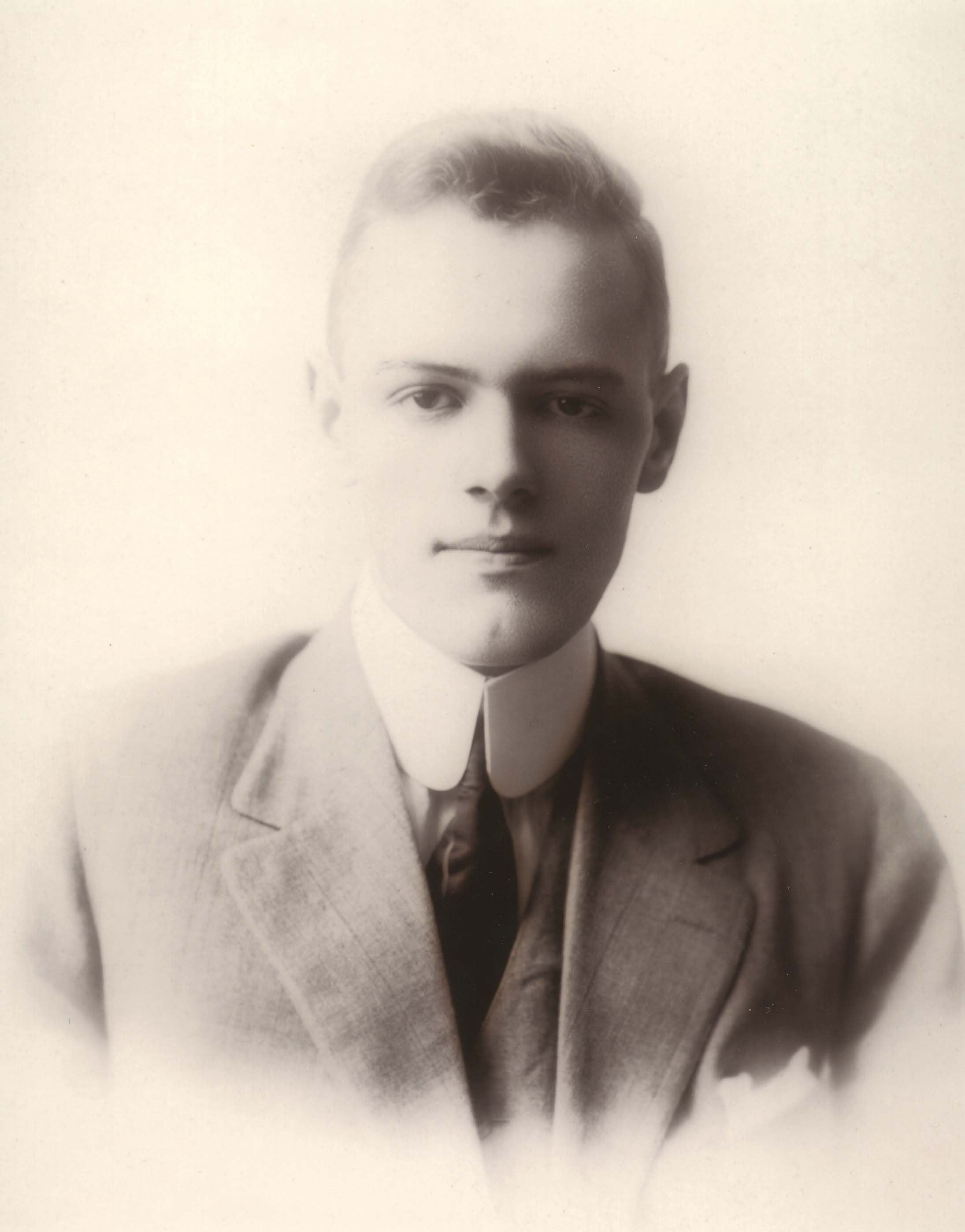
seward-johnson-1928.jpg

Seward Johnson, 1928

I received a comment on my last post from Todd Woofenden, who’s the editor of a fascinating website, The Sub Chaser Archives, which details the stories and history of U.S. sub chasers in World War I.   Sub chasers were heavily armed wooden hulled boats that were built to hunt down the German U-boats, or submarines, that dominated the seas and caused heavy losses to shipping and merchant convoys carrying supplies.  Given the destructive effectiveness of the U-boats, this was dangerous work.

I had mentioned in my last post that Robert Wood Johnson’s younger brother, John Seward Johnson, was on a sub chaser during World War I.  In fact, he was the second in command on Submarine Chaser 255 when he was 21.  Here’s a photo of the subchaser Seward Johnson served on, courtesy of The Subchaser Archives.  According to the Subchaser Archives, these boats had two commanding officers and typically had around 22 crewmen.  Here’s a photo from 1917 of sub chasers under construction at the New York Navy Yard, which gives an idea of their size…which, according to the Archives, was 110 feet.

Here’s a quote from Seward Johnson about his sub chaser days from a 1969 Company publication in our archives:

“ ‘Our orders were to bottle up German and Austrian submarines that were making disastrous forays on our shipping in the Mediterranean.  This is where my experience with signaling helped me considerably as a commanding officer.  As soon as the flagship broke out their signal flags, I was the first in the fleet to understand the message.  I would break out my answer immediately, before any other vessel.’ ”  [Johnson & Johnson Bulletin, in-house publication, April, 1969, pp. 2-3.] 

Published in: Did You Know?, People | on September 27th, 2007 | No Comments »

Young Robert Wood Johnson Joins the Company

In my last post, I talked about how the sudden death of Robert Wood Johnson the first caused shock and sadness among his family and his employees.  It was a measure of Johnson’s foresight and planning that he left Johnson & Johnson in very good hands, with strong management who could continue to guide and grow the company that he and his brothers built.  James Wood Johnson was elected President of the Company, and he soon had a new and unexpected employee:  his nephew, Robert Wood Johnson, Jr. 

 Undated Rutgers Prep Photo of Robert Wood Johnson

Undated Rutgers Prep Yearbook Picture of Robert Wood Johnson

Young Robert had always been close to his father, and his death when Robert was 16 left him struggling to adjust.  After his graduation from Rutgers Prep at age 18, Robert decided to join Johnson & Johnson immediately, against the wishes of his family, who wanted him to go to college first.  During the summer after graduation, he again worked for the Company in a variety of jobs in the factory while his mother and uncle James tried to persuade him to finish his education before coming to work full time. 

Their compromise was that Robert took post-graduate classes at Rutgers Prep while continuing to work part time at Johnson & Johnson.  He began to spend more time at work and less at school, while continually asking the plant foremen for a full-time job. 

Power House, 1907

Power House, 1907.  The Building Still Stands, and is Our Last Remaining Old Building

Robert Wood Johnson was hired first to work in the Power House, in the lowest job there, and moved from department to department to learn how the business worked.  Robert was a hard worker, and the workers treated him as one of their own and formed a close bond with him.  He was an avid reader and continued his education from books and by learning his family’s business from the ground up. (Incidentally, the Power House Building, now the Kilmer Museum, is our last remaining building from the earliest days of the Company.)

 genemployees2.jpg

Robert Wood Johnson (lower center) and Workers

In 1914, Robert was elected to the Board of Directors to replace J. Ellwood Lee, who had died.  Robert was 21.  He didn’t have direct management control over the Company, since at that time it was handled by a Board of Control, but this recognized the fact that Robert would become a major stockholder when he turned 25, and would then have a say in how the Company was run.  In 1915, Robert was made a department head, to the great delight of the workers who were so fond of him.  He also began visiting Fred Kilmer in his laboratory more and more.  They developed a close relationship, and Kilmer provided Robert with fatherly advice. 

 Early Workers Standing in front of Cotton Products

Employees Standing in front of Stacks of Absorbent Cotton Products

In 1918 Robert became the General Superintendent of Manufacturing for Johnson & Johnson.  By that time, the Company was producing huge quantities of sterile dressings, gauze, and other medical products to treat soldiers fighting in Europe in World War I.  During the late summer and early fall of 1918, the Company also made gauze face masks to help restrain the devastating 1918 flu epidemic that was sweeping through the nation.  People wore these masks whenever they went out in public, to try to stem the tide of infection.  It was estimated that the epidemic killed perhaps 50 million people worldwide.  Closer to home, one-third of the citizens of New Brunswick were infected – about 6,700 people [Robert Wood Johnson, The Gentleman Rebel, by Lawrence G. Foster, p. 137] 

Robert’s younger brother Seward commanded a submarine chaser in the Navy, and his sister Evangeline, never one to be outdone by her brothers, was a lieutenant in the Red Cross Ambulance Corps in New York.  When TNT stored at the Gillespie shell-loading depot in Morgan, New Jersey (part of modern-day Sayreville) exploded on October 4, 1918, destroying parts of nearby South Amboy and Perth Amboy, 21-year old Evangeline volunteered for the dangerous assignment of going in and helping the wounded, among still-unexploded shells. 

World War I ended in November of that year.  The War Department awarded Johnson & Johnson a special commendation for its outstanding performance during the war, and the head of the American Food Administration, Herbert Hoover praised the Company for its support of the food conservation campaign that was part of the war effort.  Perhaps the most unusual award came from the Russian Minister of War (Russia and the United States were allies during World War I) who presented James Wood Johnson with a silver and gold cigar box.  James had invested in the Neverslip Horse Shoe Company in New Brunswick and it had filled the largest order in its history for horseshoes for the Russian cavalry. 

When Seward Johnson’s Navy service was completed in 1919, he returned and joined Johnson & Johnson in the purchasing and planning departments.  Robert would always have the larger role in the Company, but the two brothers would retain a lifelong close relationship.  The stage was set for a younger generation of management with new ideas that would guide the Company into global expansion and decentralization.  Another member of that generation, a cotton mill employee named Earle Dickson, would invent the BAND-AID® Brand Adhesive Bandage, which would become one of the products that would define Johnson & Johnson in the minds of consumers.


Published in: Beginnings, Landmarks, People | on September 21st, 2007 | 14 Comments »

The Passing of the Torch

Johnson & Johnson circa 1890-1910

The year 1910 was a pivotal one for Johnson & Johnson. The company was doing well and growing, with a variety of product lines that included medicated plasters, sterile surgical dressings and sutures, but also products for women’s health, baby products, hygiene and personal care products, and more.   Robert Wood Johnson was president of the company, and with his brother James, Fred Kilmer and others, he steered the direction of Johnson & Johnson.  From the time he was five years old, Robert Wood Johnson’s eldest son Robert had accompanied his father to business meetings.   

 Robert Wood Johnson, Jr. as a Child

Robert Wood Johnson, Jr. as a Child

Throughout his childhood, Robert had continued to visit his father’s factories and offices.  He had a serious temperament and was very interested in the workings of the business, the products made there, and the workers, and he asked a lot of questions that the staff was happy to answer. 

Company founder Robert Wood Johnson

Company Founder Robert Wood Johnson 

Robert Wood Johnson the first had always enjoyed good health, so it was unusual when he left work early on January 31, 1910, complaining of not feeling well.  When he felt too ill to attend the company’s annual stockholders meeting the following day, everyone knew that something was seriously wrong.  (Johnson & Johnson didn’t become a publicly traded company until 1944, so a stockholders meeting in those days consisted of the company’s top management.)  Johnson’s family physician visited Gray Terrace several times before announcing that Johnson had Bright’s Disease, a very serious illness affecting kidney function.  In 1910, there was no successful treatment for it.  Dr. Edward Gamaliel Janeway, one of the most prominent physicians of his day, and a friend of Johnson’s, was called in.  The Janeways – of Janeway and Carpender wallpaper plant fame — were another prominent New Brunswick family, and Dr. Janeway had been the consulting physician to Presidents Grover Cleveland and William McKinley.   Here’s a picture of Dr. Janeway and a little more information about him.  Unfortunately, all the two doctors could do was to make Johnson comfortable.  Robert Wood Johnson died eight days later, on February 7, leaving his wife, his children, and 2,500 employees.   His oldest son Robert was 16 years old.

Robert Wood Johnson the First

At Johnson & Johnson, the mood was gloomy.  Robert Wood Johnson the first was so vigorous, energetic and brimming with ideas that many were not convinced the company would continue to prosper without him.  However, Johnson had the foresight to ensure that, besides his brother James, the company had strong managers in place that could continue the business on the same trajectory.

Johnson’s funeral was held on February 9, and it was the largest funeral New Brunswick had seen.  Over 1,000 Johnson & Johnson employees gathered at the plant and walked to Gray Terrace to pay their respects – the line stretched from the Johnson house (which was at the corner of College Avenue and Hamilton Streets) all the way back to Johnson & Johnson.  Members of the city’s civic, religious and charitable organizations also paid their respects.   After the funeral service, mourners lined the mile-long route to Elmwood Cemetery.  When Johnson’s burial had to be delayed for a few days because the ground was frozen, it was a measure of the respect and loyalty he inspired that a group of his employees formed a 24-hour guard at the temporary vault.

Fred Kilmer wrote a tribute to Johnson that said, in part:

“ ‘When once convinced that an article which he could manufacture would save life and prevent suffering, he caused it to be manufactured and placed before the [medical] profession irrespective of any consideration of profit.’ ”  [Robert Wood Johnson, The Gentleman Rebel, by Lawrence G. Foster, p. 109]

If that philosophy about putting patients first sounds vaguely familiar, Johnson’s son Robert would later clarify many of the values he learned from his father into Our Credo

On February 18, the board of directors named James Wood Johnson as the company’s new president.   James, who was quieter and more laid-back than his brother, hastily assured employees that “My policy was my brother’s policy…My brother’s policy is my policy.”  [RWJ the Gentleman Rebel, p. 109]

 Robert Wood Johnson Jr. as a teenager

Robert Wood Johnson, Jr. Circa 1910

Johnson’s eldest son Robert struggled to adjust to his father’s death.  He returned to Rutgers Prep to complete his junior year and in the summer, asked if he could take a job at the factory.  Robert bonded with the workers, especially the Hungarian immigrants.  He was also living with his uncle James, his mother and siblings having left Gray Terrace for New York.  As a result, when Robert graduated from Rutgers Prep, he made a momentous decision:  instead of going to college, he wanted to join the company.

More on this story in my next post…

Published in: Beginnings, Landmarks, People | on September 14th, 2007 | 13 Comments »