Archive for the 'Beginnings' Category

Johnson & Johnson History on the Web

General Robert Wood Johnson

Investor’s Business Daily just did a feature article called “Johnson & Johnson’s Big Shot” – about none other than General Robert Wood Johnson.  The article is drawn from two interviews, one with Larry Foster, the author of Robert Wood Johnson: The Gentleman Rebel, a frequently quoted source on this blog; and one with David Morse, the head of communication for the Robert Wood Johnson Foundation.  Larry Foster worked with General Robert Wood Johnson:  he was hired by him to start the Company’s Public Relations department.   Here’s the link to the article:  http://www.investors.com/NewsAndAnalysis/Article.aspx?id=543441&p=2

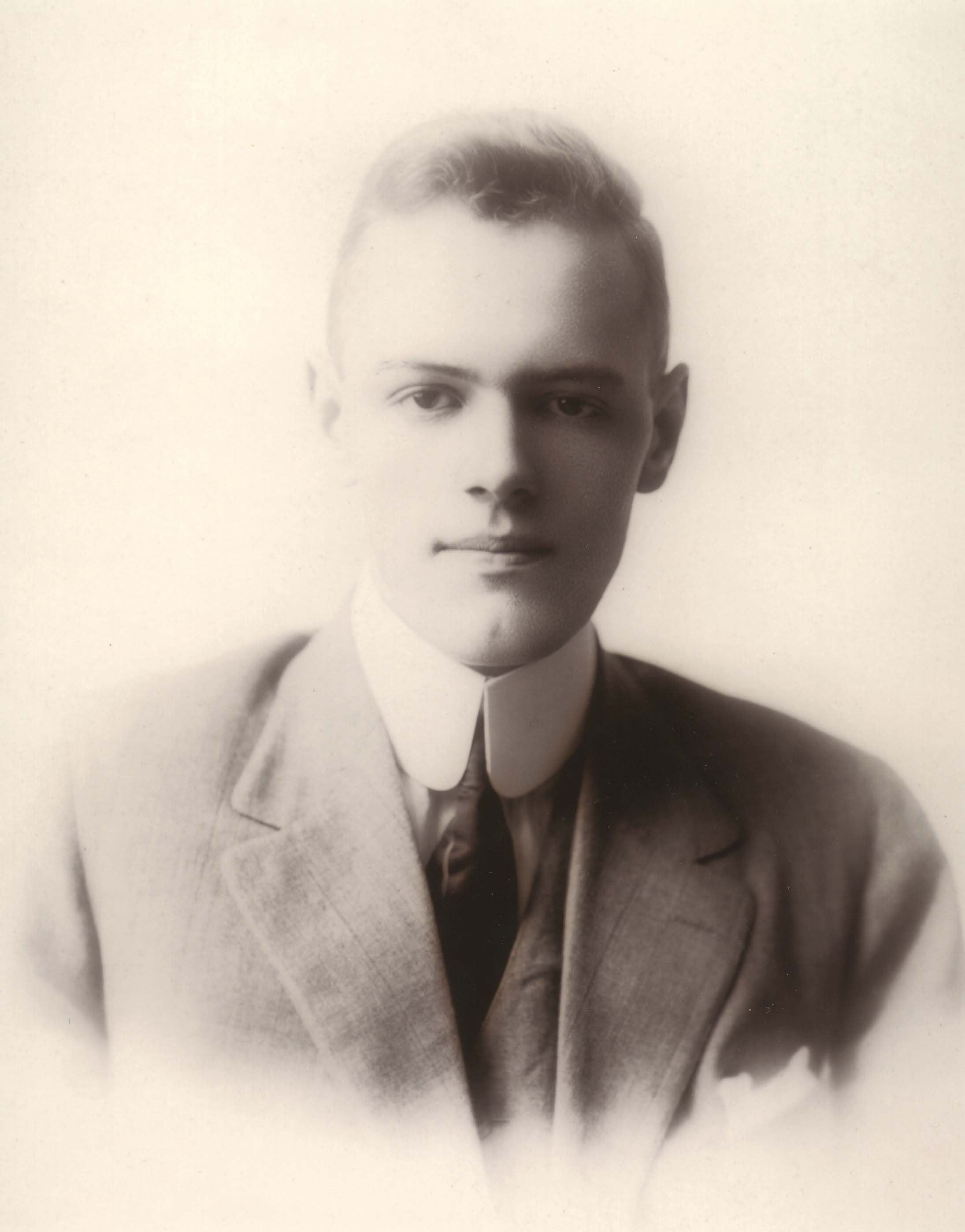
Robert Wood Johnson II as a teenager — about the time he started full time work at Johnson & Johnson

The feature article highlights the very different path to success taken by Robert Wood Johnson II.  The son of one of our founders, Johnson could have started at the top.  Instead, he chose to come to work full-time at Johnson & Johnson as a teenager…working side by side on the manufacturing floors with the Hungarian immigrants who at one time made up about 60 percent of our workforce in New Brunswick.  As Robert Wood Johnson worked his way up through the ranks, he developed a very different way of thinking that resulted in our philosophy of decentralized global expansion, and in the writing of Our Credo.

For blog readers who have visited Johnson & Johnson World Headquarters in New Brunswick, the former power house building in which the teenaged Robert Wood Johnson started his first full time job is still here.  Does anyone know which building it is today?

Published in: Beginnings, New Brunswick, People | on August 19th, 2010 | No Comments »

Robert Wood Johnson Writes an Article

In recognition of the 100th anniversary of the passing of Johnson & Johnson founder Robert Wood Johnson in 1910, this is one of several posts looking at the earliest years of Johnson & Johnson, Robert Wood Johnson as our first president, and the Company’s first senior management transition.

1888 Belladonna Plasters ad

Rare early ad for Belladonna Plasters, from our archives, 1888.

We know Company founder Robert Wood Johnson as the ultimate businessman.  But he also had a hands-on scientific side that started with his training in the early 1860s as a teenaged apprentice in Wood & Tittamer, his maternal relatives’ apothecary in Poughkeepsie, New York, where Johnson first learned to make medicinal plasters.  Johnson went on to spend many hours with his sleeves rolled up, elbow-deep in pails full of ingredients, trying to improve the methods of making one of the 19th century’s most popular health care products — the medicated plaster.  In 1894, when Johnson & Johnson had been in business for eight years, Robert Wood Johnson wrote an article about what he had learned from his long experience.

Wood & Tittamer

Wood & Tittamer, where Company founder Robert Wood Johnson got his start in health care as a teenager. 

Before the Johnson brothers’ improvements, the issues with handmade medicated plasters were many.  The ingredients were hard to work with.  The plasters wouldn’t keep for long periods of time, and the methods of making the rubber flexible frequently rendered the medication inactive.  Writing elsewhere, Robert Wood Johnson said:  “‘Probably no other branch of the pharmaceutical art has been the occasion of so much toil, anxiety and failure and discouragement before any measure or success was met.’”  Describing the frustrations of his years of experimenting with plaster making to improve the product, Johnson went on to say, in his very polite fashion, “‘Expressive expletives could not be restrained.’”  [Robert Wood Johnson, The Gentleman Rebel, by Lawrence G. Foster, Lillian Press, 1999,  p. 13]

Robert Wood Johnson the first

Robert Wood Johnson the first

By the time Johnson & Johnson was established, Robert Wood Johnson had solved many of these issues.  He used a different kind of rubber base and found ways to work with the properties of the ingredients, and not against them.  The machinery designed by James Wood Johnson allowed Johnson & Johnson to mass produce these products with improved efficacy, high quality and consistency.  

Some of the machinery designed by James Wood Johnson for the manufacture of medicated plasters.

Belladonna plasters in particular had led to much teeth-gritting frustration in the medical products industry, because the heat used in the manufacturing process at that time tended to render the active ingredient inactive.  The person who finally solved that problem through practical scientific experimentation was Johnson & Johnson founder Robert Wood Johnson.  His improvements made plasters more stable and more effective, and they were incorporated into the 16th edition of the United States Dispensatory and written up in a variety of pharmaceutical journals as a great leap ahead.  With those credentials as an expert, and a range of medicated plasters manufactured by Johnson & Johnson, Robert Wood Johnson wrote his 1894 article.

Cover of Belladonna Illustrated, 1894

The article appeared in a Company publication called “Belladonna Illustrated, A Study of Its History, Action and Uses in Medicine” that brought together contributions from leading experts including doctors, scientists and academics.  Johnson’s contribution focused on the making of belladonna plasters, and it was titled (not surprisingly), “Making Belladonna Plasters.”  The article is interesting, both for Johnson’s practical scientific knowledge and his no-nonsense writing style.

Johnson began by recognizing medicated plasters as having a sound basis in science.  Let’s hear directly from Johnson in his own words:

“Plasters are such common articles of merchandise that we are apt to think of them as things that are bought and sold by the pound or yard; but, in the compounding and mixing room, problems arise that call for the same judgment and skill needed in all branches of scientific pharmacy.”  [Robert Wood Johnson, “Making Belladonna Plasters,” from Belladonna Illustrated, Johnson & Johnson, 1894, p. 34]

Then, perhaps influenced by his friend the writer Edward Page Mitchell, Johnson launched into a series of quotations from doctors, pharmacists and patients that give the reader the experience of reading dialogue.  Today, we’d probably call that something like “voice of the customer,” but to Robert Wood Johnson in 1894, it was a foundation of solid scientific evidence to back up the points he was making in his article, and it all focused back on the people who used the products and what their needs were.  In his usual plain speaking style, Johnson summed it up: “The patient will tell you that he does not put on plasters for fun, or as a substitute for clothing; he wants to get well.”  [Robert Wood Johnson, “Making Belladonna Plasters,” from Belladonna Illustrated, Johnson & Johnson, 1894, p. 34]

The article is highly technical and goes into great detail, but it’s easy to read because Johnson used plain language to describe the scientific properties of the ingredients and the technical processes he had perfected.  Robert Wood Johnson had learned the health care business through the 19th century career training path of apprenticeship, and his writing reflected that as well as his personality.  If you read the quotes in this post out loud, you can really get a sense of how Johnson spoke. 

“To make a good belladonna plaster with any kind of base, is not easy.  It was not accomplished in the ‘good old way,’ when belladonna juice or the leaf itself was ‘melted down’…”  [Robert Wood Johnson, “Making Belladonna Plasters,” from Belladonna Illustrated, Johnson & Johnson, 1894, p. 34]

“The National Dispensatory says ‘temperature 120-130 is required.’  In my experience this heat would greatly injure belladonna, would be disastrous, and good belladonna would be cremated in the mass so that it would never reach the spot where it could do any good as a curative.”  [Robert Wood Johnson, “Making Belladonna Plasters,” from Belladonna Illustrated, Johnson & Johnson, 1894, p. 34]

“Everything put into a plaster which is not an active medicinal agent, or has no use in promoting adhesion or absorption, is simply debris that will fill the pores of the skin with so much dirt, and stands in the way of the drugs being absorbed.”  [Robert Wood Johnson, “Making Belladonna Plasters,” from Belladonna Illustrated, Johnson & Johnson, 1894, p. 34]

“After all the study and experiment in putting rubber into every conceivable shape, one cannot with any certainty tell whether a certain piece of rubber will spoil quickly or not. If the plasters keep the rubber is all right; if the plasters spoil the rubber is not all right.”  [Robert Wood Johnson, “Making Belladonna Plasters,” from Belladonna Illustrated, Johnson & Johnson, 1894, p. 35]

And finally, Johnson’s no-nonsense practicality comes across in his description of the skills needed to make a successful belladonna plaster:

“The operation of mixing and spreading on cloth requires care and skill that comes only with thorough training, one must have quick hands, an eye on the thermometer and quick discernment as to when the proper plasticity is reached.  These with accurately adjusted apparatus guided by a good, clear-headed judgment are pre-eminent requisites in the spreading of a belladonna plaster.   [Robert Wood Johnson, “Making Belladonna Plasters,” from Belladonna Illustrated, Johnson & Johnson, 1894, p. 36]

Although the article in our archives that Johnson wrote was only three and a half pages long, it gives us the perfect opportunity to hear the voice of one of our founders, Robert Wood Johnson.

Published in: Anniversaries, Beginnings, People | on August 12th, 2010 | 1 Comment »

A Look Inside Our Original Building

In recognition of the 100th anniversary of the passing of Johnson & Johnson founder Robert Wood Johnson in 1910, this is one of several posts looking at the earliest years of Johnson & Johnson, Robert Wood Johnson as our first president, and the Company’s first senior management transition.

It’s 1887 and Johnson & Johnson has grown in just one year from 14 employees in one building to 125 employees in several buildings.  Our original building from 1886, the four-story former wallpaper factory, is now the plaster mill, filled with machinery designed by founder James Wood Johnson to mass produce medicated plasters.  Now, for the first time, we have an opportunity to see what it looked like inside that building. Let’s take a short walk through.

Drawing of First Johnson & Johnson Building, 1886

Artist’s Rendition of the First Johnson & Johnson Building from 1886

So how can we go back to 1887 and see inside our first building?  We can do that because we’re fortunate to have in our archives the second article ever written about Johnson & Johnson.  (In case you’re wondering, the first article was a single paragraph in the March 3rd, 1886 edition of The New Brunswick Times, announcing that the three Johnson brothers had rented a building and would soon start operations.)

The Second Article Written About Johnson & Johnson, from 1887

In April of 1887, a publication called The Detroit Pharmaceutical Era did an article on the manufacture of medicinal plasters (another name for medicated plasters, the popular medical product of the day).  Since the Johnson brothers changed the way in which those products were made and improved their efficacy, the article focused on how Johnson & Johnson manufactured them.

A Medicated Plaster

Medicated, or medicinal plasters delivered medicine directly through the skin.  They were made of rubber infused with a medication – commonly to generate heat or pain relief – and they were sticky on one side.  You peeled off the backing and stuck the plaster, or as big a piece of the plaster as you needed, directly over the part of the body needing the medication, and removed it when you were done. 

Johnson & Johnson Buildings in 1887

The Johnson & Johnson buildings in 1887.  Our first building, the former Janeway and Carpender wallpaper factory, is the building on the left.

Here’s a detailed eyewitness description of Johnson & Johnson in 1887, from the writer at The Detroit Pharmaceutical Era who came here to do the article:

“The factories of the house of Johnson & Johnson stand back from the depot of the Pennsylvania Railroad at New Brunswick, N.J. about 150 feet.  They are large and extensive, including, as they do, three handsome brick buildings and covering an area of 8,00 square feet, or about two acres of land.  In the neighborhood of 35,000 square feet of flooring are used in the manufacture of all the products of the firm…The main building, which is devoted entirely to the manufacture of the rubber plasters, is of brick and is four stories high.  In its basement is a 200-horse power engine which furnishes power for all three of the buildings.  Back of the main edifice is a smaller one, devoted exclusively to the manufacture of mustard plasters, while on its side is still another brick building five stories in height, devoted to the manufacture of the numerous other pharmaceutical preparations turned out by the house.”   [Detroit Pharmaceutical Era, “The Manufacture of Medicinal Plasters, April, 1887] 

The products made in the five story building would have included sterile surgical dressings, sterile sutures, and adhesive tapes.   If anyone’s wondering what that basement engine room might have looked like, it probably looked a lot like this:

Old Mill Boiler Room 1894

From our archives, photo showing the Engine Room, Old Mill, from 1894.


Here’s an employee in the drying room in our first building, hanging the flattened sheets of rubber that would be used to make medicinal plasters. 

According to the article, the drying room was directly over the boiler room, and the temperature of the drying room was never allowed to fall below 100 degrees.  Despite the heat, the drying process took a full week.  Also interesting is the fact that the employees in the illustrations are depicted wearing hats.  None of our plaster mill employees from the 1800s photographed in our archives are wearing hats in the photos; perhaps the illustrator (or the employees) felt that a hat would be more formal and proper for the important occasion of being depicted in an illustration for an article in 1887.  

Here’s an illustration of the plaster mixing and spreading room in our original building.  The machinery was designed by Company founder James Wood Johnson, who was a skilled and creative engineer.  His machinery improved the methods of mass producing medicated plasters. 

Plaster Mixing and Spreading Room, 1887, from the original Johnson & Johnson building. 


Here’s another corner of our first building, with an automatic perforating machine, for the manufacture of porous plasters — like the Belladonna Plaster shown in this post.  (Porous plasters got their name from the rows of small round holes, or perforations, in them.)  Interestingly enough, James Wood Johnson didn’t invent this complex machine.  So who did?  Here’s what The Detroit Pharmaceutical Era said:  “The machine is a complicated one that works automatically, and is the invention of Mr. R. W. Johnson.” 

The Automatic Perforating Machine, in our original building

The article described the manufacturing process in detail, and the writer was clearly impressed by the number and variety of products the new company manufactured, because he took an entire paragraph to list them.  The writer wrapped up with an overall appreciation of the entire medicated plaster industry.

“In the entire output of the country fully 160,000 pounds or 80 tons of rubber is used yearly; and when it is considered how small the quantity of rubber material necessary for a single plaster of almost infinitesimal thickness, the full extent of the enormous number made yearly and the magnitude of the industry can be appreciated.”  [Detroit Pharmaceutical Era, “The Manufacture of Medicinal Plasters, April, 1887] 

Readers of Kilmer House can certainly appreciate the opportunity to see inside our first-ever 1886 building in 1887, just a year after Johnson & Johnson started, and the glimpse of some of our early innovation in improving one of the most popular health care products of almost 125 years ago.

R.W. Says “It’s a Go!”

In recognition of the 100th anniversary of the passing of Johnson & Johnson founder Robert Wood Johnson in 1910, this is one of several posts looking at the earliest years of Johnson & Johnson, Robert Wood Johnson as our first president, and the Company’s first senior management transition.

Johnson & Johnson Buildings in 1887

Illustration of Johnson & Johnson from an April, 1887 article in the Detroit Pharmaceutical Era, from our archives.  Our first building is on the left.

Johnson & Johnson opened its doors in 1886 with fourteen employees.  By 1887, that number had grown to 125, and the Company had expanded from the original four-story former wallpaper factory building into several surrounding buildings, overseen by James Wood Johnson, who was in charge of manufacturing.  We also had a sales office managed by Edward Mead Johnson in downtown Manhattan. (It was at 32 Cedar Street, in case anyone’s curious.) 

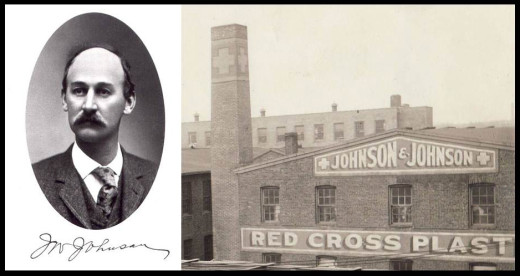
Robert Wood Johnson

Robert Wood Johnson

Company founder Robert Wood Johnson initially spent a lot of his time in the New York office, notifying his many friends and acquaintances in the medical products field that he had joined Johnson & Johnson, and helping get the new business off the ground.  In 1887, Robert began spending more and more time in New Brunswick.  The original fourteen employees knew him from Seabury & Johnson, but the newer employees, used to the quieter and more laid back style of James Wood Johnson, were initially in awe of Robert Wood Johnson, who created a flurry of energy and activity wherever he went.  Their first impression of R.W. – as he was known – was that he was authoritative, opinionated and had a quick temper, but once they got to know him, they liked what they saw.  Johnson had the ability to rally and inspire his employees and get them excited about the work they were engaged in – making products that would help save patients’ lives.  “’He injects his enthusiasm, his grit and his faith into everyone else, and when ‘R.W.’ says ‘It’s a go!’ we push forward with all of our strength,’” said Fred Kilmer, who ended up so inspired by Johnson that he sold his business and came to work for the Company.  [Robert Wood Johnson: The Gentleman Rebel, by Lawrence G. Foster, Lillian Press, 1999 p. 69] 

Morell Street Houses

One of the Company’s early benefits:  subsidized employee housing on Morell Street in New Brunswick

Johnson enacted a wide range of benefits for employees that made them fiercely loyal to the new company.  When R.W. wasn’t at Johnson & Johnson, he was walking downtown to talk to the local merchants about business.  He also stopped into the New Brunswick pharmacies to make sure they carried Johnson & Johnson products.  One of those pharmacies was Fred Kilmer’s Opera House Pharmacy, right down the street from Johnson & Johnson, and he and Kilmer struck up a friendship that led to Kilmer joining Johnson & Johnson as our scientific director in 1889. 

Fred Kilmer's Opera House Pharmacy

Fred Kilmer’s Opera House Pharmacy

Kilmer was a gifted writer, and he left some vivid eyewitness descriptions of his friend and employer.  Here’s one of Kilmer’s descriptions of Company founder Robert Wood Johnson that paints a picture of what Johnson was like:  Kilmer described Johnson as tall and stout, with dark hair and eyes, and a forceful, outgoing personality.  “‘If you see him you will always remember a peculiar roll of the head which accompanies his laughter and his arguments.  It is performed by dropping the chin, and ascribing there a small circle, of which the spine is the center.  It is a family roll.  He has it and all of his brothers have it…If you get into an argument with him, he will soon utter some dogmatic statement with a determined air and branch off into something else, as if he had settled the subject.  While he is undecided he is willing to listen, but when his course is once settled, I would not care for the job of turning him in another direction.’”  [Robert Wood Johnson: The Gentleman Rebel, by Lawrence G. Foster, Lillian Press, 1999, p. 69] 

Johnson & Johnson office, 1895

Johnson & Johnson office in 1895, with R. W. Johnson in the window looking out at the main office.

Robert Wood Johnson involved himself in every facet of the new business.  He opened the Company’s mail every morning.  He would gather a few of his managers in a room, and when the sacks of mail were brought in, they opened all of it, sorted it and responded personally to customer orders, inquiries and suggestions.  Johnson had a very good memory, and could rattle off detailed up to the minute sales figures.  He could tell you which products sold in which markets and how much they sold, how much inventory the Company had and how much could be produced and shipped in any time period, and he could recite a wide variety of economic information about the various countries in which we sold our products.   

Another facet of the business Johnson involved himself in was advertising.  Johnson & Johnson worked with a young advertiser who had bought a small agency for $500 and renamed it after himself:  J. Walter Thompson.  He and Robert Wood Johnson had been friends for several years, and Thompson personally handled the Johnson & Johnson account.  Johnson didn’t hesitate to write to Thompson with minutely detailed constructive suggestions about how to improve his ads.  (A trait his son, the future General Robert Wood Johnson, would inherit.)  Here’s an example:  “‘I return the sketch and hardly see how you can make an advertisement out of it.  It needs to have a very black background in order to throw out the white letters.’”  [Robert Wood Johnson: The Gentleman Rebel, by Lawrence G. Foster, Lillian Press, 1999 p. 51]  (If anyone’s interested, here’s an ad campaign that Thompson worked on for us in 1910.)

Grey Terrace

Grey Terrace, Robert Wood Johnson’s New Brunswick, New Jersey House

As Kilmer House readers may know, Robert Wood Johnson lived in a big house on the corner of Hamilton Street and Easton Avenue in New Brunswick.  Every afternoon, he walked home to have lunch with his wife and three young children, relaxed for a bit in his library, and then he walked back to Johnson & Johnson to resume his business day.

Site of Grey Terrace Today

The site of Grey Terrace today — a Rutgers University parking lot.  Although you can’t have lunch with Robert Wood Johnson the first, you CAN buy lunch from the Rutgers University food trucks that park on the site of Johnson’s former house.  The stone wall and short wrought iron fence that surrounded the house and property are all that remain.

Robert Wood Johnson

One hundred years later, there are still traces of Company founder Robert Wood Johnson here in the traditions that he started:  disaster relief, support for our employees who serve in the military, and a wide range of employee benefits, not to mention three out of the four pillars of the Company’s operating model:  our broad base in human health (if there was a need in society for particular products to save lives or help people, Johnson saw to it that we developed or made those products), management for the long term and the Company’s value system that would see its full expression in Our Credo, written in 1943 by Johnson’s son.

Here are some quotes from Robert Wood Johnson the first:

“The worst thing that can happen to a man is to lose his courage.”

“Hire men, buy machinery and keep the wheels moving and everybody busy.”  

“We are all fortunate, in that we are engaged in manufacturing products to be used throughout the world for the relief of pain and suffering.”

And, of course, when he liked an idea and wanted to move forward with it: “It’s a go!”

Published in: Beginnings, Local Interest, New Brunswick, People, Traditions | on June 8th, 2010 | 1 Comment »

Mothers Day: 120 Years Ago — Maternal and Baby Health Kits


With Mother’s Day coming up in the U.S. on May 9th, Kilmer House would like to salute all of the Moms throughout our history and in our present.  This is the first in a series of three Mother’s Day posts that talk about some of our history that is connected to mothers.  One of the ways Johnson & Johnson supported mothers starting in the 1890s was through the manufacture of maternity kits, designed to insure safe childbirth for the mother and baby.

Today, there are countless books, websites, online communities and classes for expectant parents to prepare them for the birth of a child.  And in most areas of the world, childbirth occurs in a hospital with teams of trained medical professionals to ensure that the experience is routine and successful for the mother and the baby.  A hundred and twenty years ago, the experience of childbirth was very different.

In those days, most babies were born at home.  In the year 1900, only five percent of women gave birth in hospitals. The doctor or midwife — but more usually the expectant mother and the family – were expected to gather and provide any supplies that were needed for the event.  This was a practice that Johnson & Johnson was determined to change because, as our First Aid Manual stated, “The patient does not always know what is required for the maintenance of surgical cleanliness, and this is particularly true of young women, pregnant for the first time…”  [A Handbook of First Aid, Johnson & Johnson, New Brunswick, N.J., U.S.A., 1903, p. 29]

Mother and children, 1917, from our archives

Mother and children, 1917, from our archives

There was very little information for expectant parents, and they usually got it from family members of members of the community.  Needless to say, much of that information was unscientific and inexact.  Even more worrisome was the high incidence of what used to be called “childbed fever”– infection caused by the same germs that caused surgical infections.

So how does that tie in with Johnson & Johnson?  The founders of Johnson & Johnson (although they were fathers, not mothers) had families, and the Company had many women employees, so they were all very aware of the need for products that specifically addressed improving the health of new mothers.  So in the 1890s, working with prominent obstetricians, Johnson & Johnson came out with maternity kits.  These were large kits containing professional sterile medical supplies and antiseptic soaps — everything a doctor would need to ensure a safe and healthy birth for a mother and child.  The kits – Dr. Simpson’s Maternity Packet and, later, Dr. Cooke’s Maternity Outfit, were named after the doctors who worked with Johnson & Johnson on the kits.  Dr. Cooke was especially well-respected:  he was a professor of obstetrics and an obstetric surgeon in New York, and the author of many articles and books in his field.   The Johnson & Johnson maternity kits could be purchased either through retail drug stores or surgical supply dealers.

Dr. Simpson's Maternity Packet

Dr. Simpson’s Maternity Packet

Dr. Simpson’s Maternity Packet contained a disposable obstetric sheet, sterile cotton sheeting, sealed aseptic gauze, sterile ligatures, and sponges, a small package of antiseptic JOHNSON’S® Baby Powder, petroleum jelly, antiseptic surgeon’s soap for sterilizing the doctor’s hands, instruments and anything else that needed to be germ free, a washcloth, materials for washing the infant’s eyes, a package of safety pins and a chart for use in keeping birth records.

Dr. Cooke's Maternity Packet 

Illustration of Dr. Cooke’s Maternity Packet

Dr. Cooke’s packet was even larger.  In addition to greater quantities of the antiseptic supplies in Dr. Simpson’s kit, Dr. Cooke’s kit also contained  24 sanitary pads (women soon began writing to Johnson & Johnson asking for them as a separate product, giving us one of our oldest consumer businesses), a nail brush (for the doctor to use in scrubbing his hands), alcohol, Synol Soap (a disinfectant soap), olive oil, boric acid solution for cleaning the infant’s eyes, sterile surgical tape, and antiseptic tablets used to make solutions to sterilize instruments.   These kits were welcomed by obstetricians, druggists and parents, to the extent that druggists advertised that they carried them to get traffic into their pharmacies.

1920 Drugstore Maternity Checklist

An idea for a drugstore window sign by a retail druggist in Madison Wisconsin, submitted to THE RED CROSS MESSENGER in 1920.  Note that fathers-to-be were listed as having responsibility for gathering supplies for childbirth.


Hygiene in Maternity Booklet

In 1902, Johnson & Johnson also published Hygiene in Maternity,” a booklet for expectant mothers covering all aspects of pregnancy, diet, delivery and how to care for a newborn baby.  The booklets were small in size so that women could carry them in a pocket or purse, and they provided real health information to expectant mothers, instead of the traditional combination of urban legends, folk remedies and proverbs that expectant and new mothers had to navigate 100 years ago.  

Today, we talk about putting science in the service of the people who use our many products.  These maternity kits and the information booklets did exactly that over 100 years ago, and greatly helped women who were becoming mothers.

How Much Do You REALLY Know About Our Annual Meeting? Re-posted from 2009.

It’s getting towards the end of April –  time for the Johnson & Johnson Annual Meeting of Shareholders.  Since we went public in 1944, you might be forgiven for thinking that our Annual Meetings started on a spring Thursday at the end of April 66 years ago — but they didn’t.  In fact, we’ve had Annual Meetings since 1888, they used to be in the winter, and the first one was held on a Saturday.  By special request, I’m reposting a post from last year: read on to find out how much you REALLY know about our Annual Meeting.  

The Earliest Meetings:  Meet Our Shareholders, All Three of Them
Johnson & Johnson has had annual meetings of shareholders (or stockholders as they were called then) since 1888 – almost since the beginning of the Company.  At that time, the group of shareholders – the three Johnson brothers – was so small that the annual meeting could have been held in a broom closet. 

Founders of Johnson & Johnson

Our Earliest Shareholders – All Three of Them:  Robert Wood Johnson (L), James Wood Johnson (Center), Edward Mead Johnson (R)

Although Johnson & Johnson was founded in 1886, it was incorporated the following year (in the fall of 1887) with capital stock valued at $100,000, with the three Johnson brothers as stockholders.  Robert held 40 percent of the shares, and his brothers James and Mead held 30 percent each.  The by-laws of the new corporation stated that the Annual Meeting of Stockholders (as it was called then) should be held on the 2nd day of January, and the Secretary of the Company was required to give five days notice in writing to each stockholder to let them know there would be a meeting.  

So…When’s the Meeting?
The Company’s secretary didn’t have to write that letter for a few months.  Our first-ever Annual Meeting of Stockholders was held on January 14, 1888 at 4:00 pm in the offices at Johnson & Johnson in New Brunswick.  Oddly enough, that day was a Saturday.  Stranger still, it was just a regular workday back in 1888.  (Work weeks generally stretched from Monday to Saturday, until the passage of legislation setting a 40-hour work week during the Great Depression.)  Presumably bad weather wasn’t much of a roadblock to attendance because two of the three Johnson brothers lived in New Brunswick and could walk to work.   But they may not have wanted to walk to the first Annual Meeting: the winter of 1888 was a notably cold and snowy one (the famous Blizzard of 1888 would occur later that year in March), and our first-ever Annual Meeting took place during a bone-chilling, unusually cold January.

Horsedrawn Wagon Stuck in the Snow at Johnson & Johnson

Undated Early Photo Showing Horsedrawn Cart Stuck in the Snow at Johnson & Johnson

When the Johnson brothers were the only shareholders, scheduling was far less formal, and shareholder meetings were held when needed to elect a Board of Directors (all internal Johnson & Johnson people at that time) or when needed to discuss or consider making an acquisition or an agreement.  That was the case in March of 1892 when Johnson & Johnson held a Special Meeting of Stockholders (all three of them) to discuss whether or not to enter into an agreement with the Papoid Company.   (They voted yes.) 

Since the three Johnson brothers were all roughly in agreement about the Company’s goals, the early Johnson & Johnson Annual Meetings were far smoother than those of Robert Wood Johnson’s previous partnership, Seabury & Johnson.  The Seabury & Johnson meetings (with only two stockholders) had been noted for the acerbic written comments made by George Seabury and Robert Wood Johnson in the margins of the meeting minutes, and for the fact that the long-suffering Seabury & Johnson treasurer was often called in to perform the thankless task of break voting ties caused by the deadlocked partners.  

The earliest Johnson & Johnson Annual Meetings were always held at the Company’s offices in New Brunswick, starting the tradition of holding them in our founding city that we continue today.

1895 Johnson & Johnsson office interior

Johnson & Johnson office, 1895, with founder Robert Wood Johnson in office window (at right) next to the clock.

At the February, 1907 Annual Meeting, the date of the meeting was officially changed to the first Tuesday in February, and the meeting was held on that date until 1943.  In 1944, Johnson & Johnson became a publicly traded company and the meeting date was officially changed to the first Tuesday of March at 11:00 am. 

How the Annual Meeting Ended Up in April
So how did our Annual Meeting end up in April?  It’s because of something that happened in 1946.  And that something was the Annual Report.  The March, 1946 Annual Meeting was adjourned until May 14th because the Annual Report covering 1945 (which had to come out before the meeting) wasn’t ready yet. 

1945-ar-inside-cover1-675x1024

Inside cover of 1945 Annual Report with notification of new date of the 1946 Annual Meeting.

Our archives don’t record the reason for the delay, but 1945 was a busy year for the Company, which was shifting from a wartime production footing back to a civilian one, further decentralizing, expanding its research and manufacturing capacity, and adding new products.  General Robert Wood Johnson summarized the eventful year that had passed in his letter to shareholders, and concluded by thanking employees:

“The men and women of Johnson & Johnson have again made an outstanding contribution to the development of the Company.  1945 was the third successive year in which production and sales have been maintained at their present record levels, and the increasing efficiency of production is a tribute to the ability and loyalty of our men and women under difficult circumstances.”  [1945 Annual Report, Robert Wood Johnson Letter to Stockholders]

From 1947 on, our Annual Meeting has been held in April…even though our modern and always on-time Annual Report comes out in March.   

Location, Location, Location
But one thing about the Annual Meeting has never changed, right? The meetings have always been held in New Brunswick.  Well…not exactly.  From 1888 to 1957, the meetings were small and were held in New Brunswick at the Company’s headquarters.  But with the 1957 opening of the Eastern Surgical Dressings Plant (or ESDP, as we used to call it) in North Brunswick, it was decided to hold the Annual Meeting there, both to show off the new state-of-the-art facility, and because it had more space. 

ESDP Exterior

The Old Eastern Surgical Dressings Plant in North Brunswick, N.J.  Home of our Annual Meetings from 1957 to 1964.

The first Annual Meeting held at ESDP had about 30 attendees.  In his role as chairman of the Company, General Robert Wood Johnson conducted the meeting — a role that has been continued by every Chairman and CEO of Johnson & Johnson since we went public in 1944. 

General Robert Wood Johnson

General Robert Wood Johnson

It was at one of the ESDP Annual Meetings that an attending shareholder gathered up his courage and asked General Johnson why he had put shareholders last in Our Credo, the one-page statement of corporate responsibility that Johnson had written in 1943, and had printed in the Company’s 1948 Annual Report.  Johnson gave the famous reply that if all of the other responsibilities in Our Credo (to doctors, patients, customers, consumers, then employees, then to the community) were performed well, then the shareholders would be well-cared for.  (And as Johnson liked to remind people when they asked that question, at the time, he himself was the largest shareholder…which probably served to end the conversation.)  

Philip Hofmann, 1972 Annual Meeting

Former Chairman Philip Hofmann at the 1972 Annual Meeting.

The meetings were held at ESDP until General Johnson retired and Philip B. Hofmann became chairman.  The 1964 meeting (the first chaired by Hofmann) was held at one of the Johnson & Johnson operating company buildings in Raritan. 

Johnson & Johnson 1972 Annual Meeting

Our 1972 Annual Meeting

Hofmann’s meeting theme, which he continued until his retirement, was to take the audience on virtual a trip around the world and report on the progress of the worldwide affiliate companies.  This set the stage for our current meetings, which report on the state and the progress of the Company throughout the world.  The meetings remained at the Raritan location until they moved back to New Brunswick in 1983…where they continue today after starting here on a Saturday in the dead of winter 122 years ago. 

[Many thanks to our corporate secretary’s office for digging through their archives, and a huge thank you to retired corporate VP of Public Relations Lawrence G. Foster, for digging through his memories of past Annual Meetings.]

Published in: Beginnings, Did You Know?, Events, Milestones, New Brunswick, Traditions | on April 21st, 2010 | 3 Comments »

Our First Employee Volunteers in the Military

Johnson & Johnson Plaster Mill Employee (left) and fellow soldier, Spanish American War, 1898

My last post talked about the origins of our tradition of employees volunteering in the community. Another way our employees volunteered was through military service to their countries, a tradition that began in 1898 with the Spanish American War when two Johnson & Johnson employees in the U.S. volunteered to serve in the military. 

One of Our First Two Employees to Volunteer to Serve in the Military in 1898: He Wrote the Company a Letter

One of those two employees, Richard G., had just accepted a position in sales, and was understandably nervous about how the management of Johnson & Johnson would take the news that he had just gotten here and would be leaving to serve in the U.S. military.  So he wrote a letter, and here are his recollections about what happened:

“I had been in the employ of Johnson & Johnson but a few months when our country became involved in war with Spain…Here I was with a new job – and I needed it – and my heart was set on going to the defense of our country.  I decided to take it up with the company.  I wrote them a frank letter, telling of my desire to enlist and asking if they would hold my position for me.  Very promptly I received a reply from the late Robert W. Johnson, then the president of Johnson & Johnson.  I have always kept that letter…” [THE RED CROSS MESSENGER, Vol. XIII, No. 5, 1921, p. 346]


Robert Wood Johnson

Robert Wood Johnson

Here’s the reply from Company founder and president Robert Wood Johnson, dated April 25, 1898:

 “Dear Sir:

We have your letter of the 24th and congratulate you upon your patriotic proposition contained therein. 

While we shall greatly regret to lose your services, and would be loath to consent to having you go for any other cause, yet under the circumstances, we not only most heartily applaud your action, but will be glad to tender you every assistance in our power.  Not only will we be glad to keep your place open for you when you return, but will also continue your pay the same as heretofore during your entire absence….Wishing you good health and good luck, we are,

 Sincerely yours,

 JOHNSON & JOHNSON

 R. W. Johnson, President”

Actually, according to Richard G’s recollections, the Company didn’t live exactly up to Robert Wood Johnson’s pledge to keep his pay the same during his service: they gave him a raise.  [THE RED CROSS MESSENGER, Vol. XIII, No. 5, 1921, p. 346]  Twenty-three years later, when he gave that interview to THE RED CROSS MESSENGER, he was one of the Company’s top salesmen.

Incidentally, the Spanish American War also started the first seeds of what would become our disaster relief program, which is one of the cornerstones of our support for the community today.

World War I – Our First Female Employee to Volunteer

Our first female employee to volunteer for military service was Katherine H., who lived in New Brunswick and worked in the advertising department.  She was a trained nurse, and when the call went out from the American Red Cross in 1917 for nurses, Katherine volunteered her services as a field nurse to the U.S. Army.

The Army rapidly promoted Katherine, and she was named head nurse and superintendent of the General Hospital #6 at Fort MacPherson in Georgia.  Here’s what the Atlanta Constitution said about her: 

“..her very presence gives one confidence…with the ideal of executive strength in her composed but expressive manner, her voice one that carries its message unmistakably, but is never sharp or loud.”  [Atlanta Constitution article, quoted in New Brunswick Home News, May 21, 1918]

A New Brunswick Home News article mentioned that the hospital’s sterilization and operating rooms were “models of up-to-dateness,” which makes you wonder if our employee volunteer, because she worked at Johnson & Johnson with its rigorous clean rooms and aseptic manufacturing standards, gave the military hospital any advice regarding surgical cleanliness.  [New Brunswick Home News, May 21, 1918]  Katherine H. was so well-liked by the nurses she supervised at Fort MacPherson that they presented her with a decorative loving cup as a token of their appreciation.  [New Brunswick Home News clipping in our archives, August 16, 1918]

From Fort MacPherson, Katherine was promoted to serve with the American Expeditionary Forces in Siberia 1918, and ended up as Chief Nurse of the Evacuation Hospital in Vladivostok, Siberia. When the war ended, she personally brought the last contingent of nurses from the hospital in Siberia back to the U.S.   Not only did they treat the wounded there, but they did their best to treat soldiers suffering from the deadly 1918 influenza epidemic as well. Here’s a postcard she sent back to her colleagues at Johnson & Johnson from Siberia, from our archives:

Published in: Beginnings, Employees, Events, People, Traditions | on April 16th, 2010 | 3 Comments »

Employee Volunteers

Laurel Club Volunteer, 1919

One of Our Early Employee Volunteers

Johnson & Johnson Family of Companies employees all over the world have a long tradition of volunteering in the community.  It reflects their feelings of responsibility to the communities in which they live and work, and it forms the basis of the third paragraph of Our Credo.  One thing that very few people know is that our tradition of employees volunteering in the community goes back over 100 years…and our earliest records show that it was started by women employees.  So, how did it start?

Laurel Club Volunteer, 1919

Another Early Employee Volunteer

Early Johnson & Johnson Volunteers in the Community
The earliest records we have of employee volunteers are from the Laurel Club, an organization of women employees that was started in February of 1907.  The Laurel Club Charter stated:  “The object of the club is to create a center where all may find opportunities of enjoyment and education.”  [Laurel Club Charter, from our archives, 2/14/1907]  From the beginning, volunteering and philanthropy were mentioned.  Nellie R., the Laurel Club president, noted that fundraising in the first year raised money to buy a bed for the General Hospital in New Brunswick, and that proceeds raised from a variety of club activities also paid for a holiday party and gifts for the 100 children at St. Mary’s Orphanage and the Industrial Homes in New Brunswick. 

Besides toys, the Laurel Club volunteers also bought the children hats, mittens, sweaters and other warm clothing.  Nellie R. noted that “All bills for this affair are paid and a balance of $23.00 invested in the J. & J. Savings Bank, to start another of the same nature or perform any act of kindness the club members may deem advisable.”   [Laurel Club Charter, from our archives, 2/14/1907]

Laurel Club Building

The Laurel Club Building – on the corner of Hamilton and Nielson Streets in New Brunswick  – site of volunteer well baby clinics.

Well baby clinics were another early volunteering effort from the Laurel Club members.  The clinics were held for New Brunswick mothers every Thursday from 4:30 to 6:30 pm, and the idea was to keep babies well in a population that included many recent immigrants who may not have had access to regular medical care.  The Thursday clinics had a doctor and a nurse on staff.  The babies were weighed and measured every week, and the doctor advised the mothers about feeding, clothing and more.   It was stressed in the July 8, 1919 club correspondence that “NONE except the DOCTOR will be permitted to give medical advise [sic].”  [Laurel Club correspondence, July 8, 1919].  While the doctor advised the women who brought their babies to the clinic, Laurel Club members sat and talked with the mothers and kept the babies amused while they waited to see the doctor.  Viahnett S., the Laurel Club manager in 1919 wrote:  “…to save even one tiny baby will be a splendid reward for the summer work.”  [Laurel Club correspondence, July 8, 1919]. 

Laurel Club Members with wounded WWI Soldiers, 1919

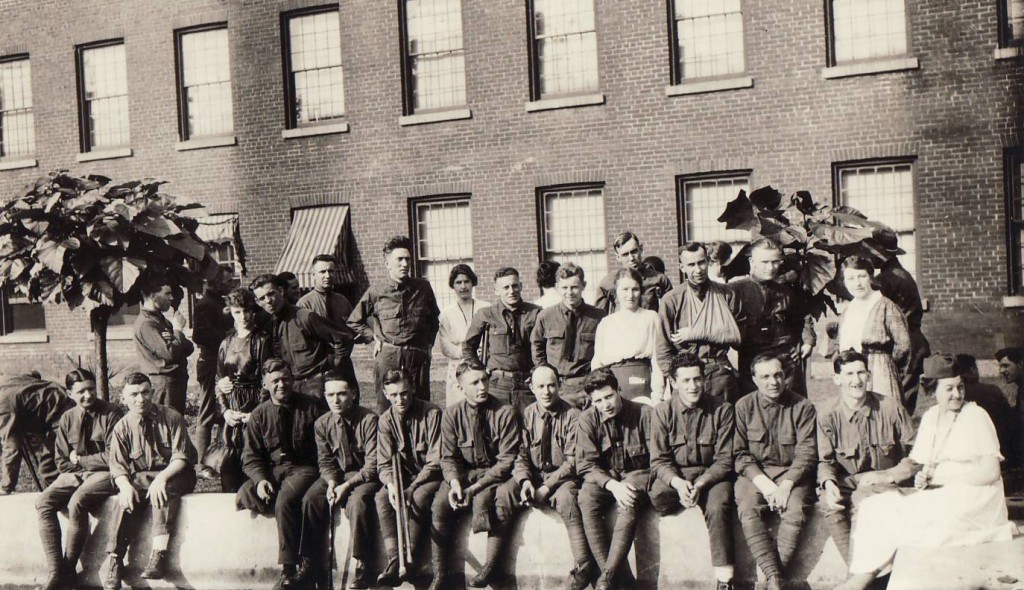
Laurel Club Members with wounded soldiers in rehabilitation, 1919

In 1919, after World War I had ended, women employees in the Laurel Club volunteered their time to help wounded soldiers who were being rehabilitated at the U.S. Hospital in Colonia, New Jersey.   Club members brought a number of the soldiers who were able to travel to New Brunswick, took them to a vaudeville show and a huge dinner at the Laurel Club.  (If anyone’s interested, they had a turkey dinner with mince pie and ice cream.)   THE RED CROSS MESSENGER noted that it would be the first of many outings to cheer up the soldiers during their extended stay at the hospital.  During the war, Laurel Club volunteers, combined with the Company’s male employee Glee Club (a singing group), had entertained the soldiers stationed at Camp Raritan with singing and dancing.

A Member of the Laurel Club

Member of the Laurel Club, Early 1900s

Employee Volunteers inside Johnson & Johnson
Employees also volunteered to help their fellow employees in the areas of health and safety.  One hundred years ago, Johnson & Johnson had volunteer first aid squads and fire brigades made up of trained employee volunteers – both men and women.  (Since Johnson & Johnson pioneered the first-ever First Aid Kits and First Aid Manuals, it was a given that the Company would train its own employees in first aid techniques.) 

Fred Kilmer

Fred Kilmer, employee volunteer

Even scientific director Fred Kilmer volunteered, using his expertise in science and public health to teach classes for employees on health, hygiene and other topics.  Kilmer’s classes on hygiene focused on contagious diseases and the means of combating them.  In the days before antibiotics and many vaccines, that was crucial knowledge.  The class even had a written exam that participants had to pass. 

Laurel Club -- Written Exam for Hygiene Class

Fred Kilmer’s written exam: you had to study if you took his volunteer classes

Some of the topics covered were germs, disinfection, isolation and antiseptics, as well as the role of house cleaning, fresh air and sunshine in preventing the spread of disease.   Employees had to answer an essay question on how they would prevent contagious disease in their homes (they could choose from scarlet fever, diphtheria, measles or typhoid).  They had to name at least two disinfectants made by Johnson & Johnson (in those days, the Company made a wide variety of public health products), distinguish insect-borne diseases from those spread by animals, and discuss how frequently a person should be vaccinated to guard against smallpox.  The exam was very serious business, as was the class.

laurel-club-exam-rwj-sig

Close up of bottom of the Laurel Club hygiene class exam, with handwritten comment from Robert Wood Johnson 

Volunteerism was encouraged by the Company at the highest levels.  Company founder Robert Wood Johnson encouraged his children to give back to the community, including taking flowers to patients in New Brunswick hospitals, and co-founder James Wood Johnson’s family members helped employees make and roll bandages to help wounded soldiers during World War I. 

Another way employees volunteered was through military service and in my next post, I’ll talk about how that started, and led to a tradition that we still have today.

Published in: Beginnings, Community, Employees, New Brunswick, People, Traditions | on April 9th, 2010 | 9 Comments »

The Johnson Brothers and the Typewriter

If things had turned out differently for James Wood Johnson and Edward Mead Johnson, two of the three brothers who founded Johnson & Johnson, they might be known for making not the first mass produced sterile surgical dressings and sterile sutures, but typewriters.  Typewriters?

An earlier post talked about Seabury & Johnson, older brother Robert Wood Johnson’s partnership, a well-respected medical products business of the late 1800s.  James and Edward both had joined Seabury & Johnson, but the increasing disagreements between the partners — Robert Wood Johnson and George Seabury — began to take their toll on the business.  Part of those disagreements stemmed from the fact that Robert Wood Johnson, inspired by seeing Sir Joseph Lister speak about antiseptic surgery in 1876, wanted to branch out into making the first mass produced sterile surgical dressings and sutures according to Lister’s methods.  George Seabury wanted to concentrate on Seabury & Johnson’s tried and true medicated plaster business instead.  In 1885, the partnership was dissolved, and the Johnson brothers were temporarily out of the medical products business.  Robert was constrained from entering the field for 10 years as part of his agreement with George Seabury.

James Wood Johnson (L) and Edward Mead Johnson (R)                   

  James Wood Johnson (L) and Edward Mead Johnson (R)

So where do typewriters come in?  Edward Mead Johnson and James Wood Johnson had become interested in the new business machines industry, and they had formed a partnership with typewriter pioneer and promoter George Washington Newton Yost, whose American Writing Machine Company manufactured a typewriter called the “Caligraph.”  Yost was one of the key figures in the promotion of that new technological marvel, the typewriter, and had convinced arms and sewing machine manufacturer E. Remington & Sons, looking to diversify, to start mass producing typewriters.   In the late 1800s, typewriters came in many different shapes, sizes, and varieties, with many different methods of operation, and were as wildly innovative as smart phones are today. 

george_washington_newton_yost_flip

George Washington Newton Yost: public domain illustration from 1893, from Wikimedia Commons

The Caligraph was the first major competitor to the Remington typewriter.  This website has some great photographs of the Caligraph (which is highly valued by typewriter collectors), as well as an ad for the American Writing Machine Company in which James Wood Johnson and Edward Mead Johnson had invested their savings. 

378px-caligraph_typewriter_ad_1896

Caligraph Ad, public domain, courtesy of Wikimedia Commons

The Caligraph writing machine featured a few innovations that Yost – and the Johnson brothers – hoped would set it apart from the Remington typewriters.  It had a non-smudging ribbon with an India-rubber base, something that no doubt appealed to engineer James Wood Johnson, who had designed and built machinery at Seabury & Johnson to mass produce India-rubber based medicated plasters.  The Caligraph initially could type only capital letters, but later extra keys were added so that it could type both capital and lower case letters – using separate keys for each. 

Unfortunately for the two Johnson brothers, Yost became involved in a patent dispute with Remington over the Caligraph.  Yost’s legal battle with Remington ended the writing machine business as a viable alternative for Edward Mead Johnson and James Wood Johnson, who lost their investment and all of their savings.  They decided to return to the medical products field, where their interests and abilities were and, in 1886, they borrowed $1,000 to start Johnson & Johnson.  As soon as Robert Wood Johnson was free of his obligations, he joined his brothers, adding his business expertise, his ideas and some much needed capital.    

Johnson & Johnson office employee in 1895 -- with a typewriter!

Employee in the Johnson & Johnson office in 1895, using a typewriter.  Is this a Remington?  A Caligraph? 

Despite – or maybe because of — James Wood Johnson’s and Edward Mead Johnson’s experiment with the writing machine business, Johnson & Johnson was an early adopter of typewriters in its offices, putting them to use within a year of starting the Company.  Three quarters of a century later, Johnson & Johnson put in its first computer, with the installation of a massive IBM punch card computer in one of its facilities and distribution centers, but it wasn’t until the 1980s, a century after Johnson & Johnson started using typewriters, that the Company started to replace that old technological marvel, the typewriter, with a newer one— personal computers — in its offices.

By the way, if there are any typewriter experts out there who can identify what kind of typewriter our employee from 1895 was using, please let me know through a comment on the blog!

Published in: Beginnings, Did You Know?, People | on February 19th, 2010 | 5 Comments »

Maternal and Child Health: From Booklets to text4baby

The White House just announced the launch of a new public health initiative, text4baby.  My colleague Marc at the JNJBTW blog just did a post on it.  It’s the U.S.’s first ever free mobile health service and it provides timely expert health information for pregnant women and new mothers through SMS text messages.  Johnson & Johnson is one of the founding sponsors.  In 2010, this health information is being provided in a portable, easily accessible manner through technology; 108 years ago, Johnson & Johnson provided health information to expectant and new mothers in the most easily portable technological method for 1902 – a small booklet.

Cover of Hygiene in Maternity, 1902

The booklet was called Hygiene in Maternity, and it was only 4 x 6 ½ inches, designed to be small enough to fit into a pocket or a purse so that women could carry it with them.  It was subtitled “Suggestions to mothers gathered from the experience of eminent authorities,” and lower down on the cover was the slogan for the Company’s maternal and child health campaign:  “Every child has a right to be born well.” 

The booklet opened with a chapter called “The First Things to Do.” Here’s the first sentence:  “As soon as she is aware of her condition, or has a belief as to its probability, the mother should place herself under the care of a physician of experience and reputation…”  [Hygiene in Maternity, Johnson & Johnson, 1902, p. 3]  It then went on to list some of the signs of pregnancy, how to calculate a delivery date, and some of the basic milestones in the development of the baby during pregnancy.  The booklet gave expectant mothers advice on keeping calm (women were advised not to read medical books – unless authorized by their doctors — or scary stories).  It also contained information on maintaining the mother’s general health during pregnancy, on clothing (telling women to abandon heavy, restrictive or tight-fitting clothing, such as corsets, during pregnancy), proper exercise during pregnancy, and proper rest and diet.   Getting back to the clothing advice for a moment, the booklet also gave this very good piece of practical advice for pregnant women:  “High-heeled shoes which impede locomotion and cause stumbling, are not to be worn.”  [Hygiene in Maternity, Johnson & Johnson, 1902, p. 6]

The Hygiene in Maternity booklet was surprisingly modern about exercise during pregnancy.  Here’s what it said: 

“Even up to the very day of lying-in, a healthy pregnant women will find herself benefited by exercise.  Extremely active exercise should be avoided, although such as is taken should be agreeable.  Exercise should be in the open air if possible; nothing is better than walking.”  [Hygiene in Maternity, Johnson & Johnson, 1902, p. 6]   

Although the booklet advised women to exercise appropriately during pregnancy, it told them to avoid heavy or strenuous housework.  In the era before modern appliances and conveniences, that advice that was no doubt received with great enthusiasm by the booklet’s readers.  Hygiene in Maternity went on to advocate plenty of sleep and devoted a long chapter to diet, recommending nutritious and easy to digest foods during pregnancy.

In another startlingly modern section, the 1902 booklet devoted a section to care of the teeth, stating that because women were more prone to tooth decay while pregnant, extra care should be taken to brush teeth at least twice daily and rinse the mouth with an antiseptic mouthwash.  Hygiene in Maternity quoted an old proverb current over 100 years ago, “for every child a tooth.”  The proverb referred to the conventional wisdom over 100 years ago about pregnancy leading to the loss of teeth.  The booklet explained that, using the latest medical knowledge, women could easily prevent that from happening.  It also covered morning sickness and how to alleviate some of its effects, preparations for labor, and making sure women and their doctors had “the maternity outfit” ready. 

Dr. Simpson's Maternity Packet

One of the Company’s “maternity outfits” – Dr. Simpson’s Maternity Packet

In 1902, most babies were born at home rather than in hospitals.  Starting in the late 1800s, Johnson & Johnson made maternal and child health kits, which contained everything the doctor would need to insure a safe and health delivery for mother and baby. 

The Hygiene in Maternity booklet went on to cover what to expect during labor, what the doctor and obstetric nurse should do, and why the room in which the baby was born should be made as clean as a hospital operating room to avoid any chance of post-birth infection in the mother.  (Called childbed fever throughout history, it was a major risk for women that the Company sought to eliminate through its maternal and child health kits and through education.) 

There was a chapter containing suggestions for the nurse during labor.  This chapter stressed putting the mother and baby first at all times, giving both medical and practical advice.  Once the baby was born, the Hygiene in Maternity booklet gave instructions that included how to tie the umbilical cord, clean the baby, and care for the mother.  It also included detailed instructions for care of the mother and baby in the days following delivery, advising the obstretric nurse on proper aseptic hygiene and listing the kinds of supplies and materials that would be used.    There was a section on feeding the baby – how often and how much, and on diet for the mother.  Even the back cover had important information:  illustrations showing the new parents how to properly hold their baby.

Back cover illustrations from Hygiene in Maternity

Back cover of Hygiene in Maternity, 1902

The Hygiene in Maternity booklet must have been immensely reassuring to expectant mothers because of its volume of information and advice starting with the beginning of the pregnancy to feeding and caring for the baby.   It was a portable, easy to follow handbook with advice from medical experts.

Illustration of Cooke's Maternity Packet from Hygiene in Maternity

Illustration of Dr. Cooke’s maternity kit from Hygiene in Maternity

The Hygiene in Maternity booklet and the “Every child has a right to be born well” education and information campaign grew out of the Company’s maternal and child health kits and its tradition of publishing educational materials to improve public health.  The Johnson brothers, with their emphasis on promoting antiseptic surgery to improve surgical survival rates, and Fred Kilmer, with his lifelong dedication to improving public health, saw these kits as an important way to reduce the risks associated with childbirth over 100 years ago.    

Since publishing Modern Methods of Antiseptic Wound Treatment in 1888, Johnson & Johnson used education as a way to promote not only its products, but also the latest medical and health knowledge — to improve surgical conditions, public health and the health of families.  We still do that today, but now we’re using text messages to cell phones – so that women can carry the advice and information with them wherever they go, just like they did with our booklet over 100 years ago.

Published in: Beginnings, Did You Know?, Public Health, Traditions | on February 5th, 2010 | 4 Comments »