The Johnson Brothers and the Typewriter

If things had turned out differently for James Wood Johnson and Edward Mead Johnson, two of the three brothers who founded Johnson & Johnson, they might be known for making not the first mass produced sterile surgical dressings and sterile sutures, but typewriters.  Typewriters?

An earlier post talked about Seabury & Johnson, older brother Robert Wood Johnson’s partnership, a well-respected medical products business of the late 1800s.  James and Edward both had joined Seabury & Johnson, but the increasing disagreements between the partners — Robert Wood Johnson and George Seabury — began to take their toll on the business.  Part of those disagreements stemmed from the fact that Robert Wood Johnson, inspired by seeing Sir Joseph Lister speak about antiseptic surgery in 1876, wanted to branch out into making the first mass produced sterile surgical dressings and sutures according to Lister’s methods.  George Seabury wanted to concentrate on Seabury & Johnson’s tried and true medicated plaster business instead.  In 1885, the partnership was dissolved, and the Johnson brothers were temporarily out of the medical products business.  Robert was constrained from entering the field for 10 years as part of his agreement with George Seabury.

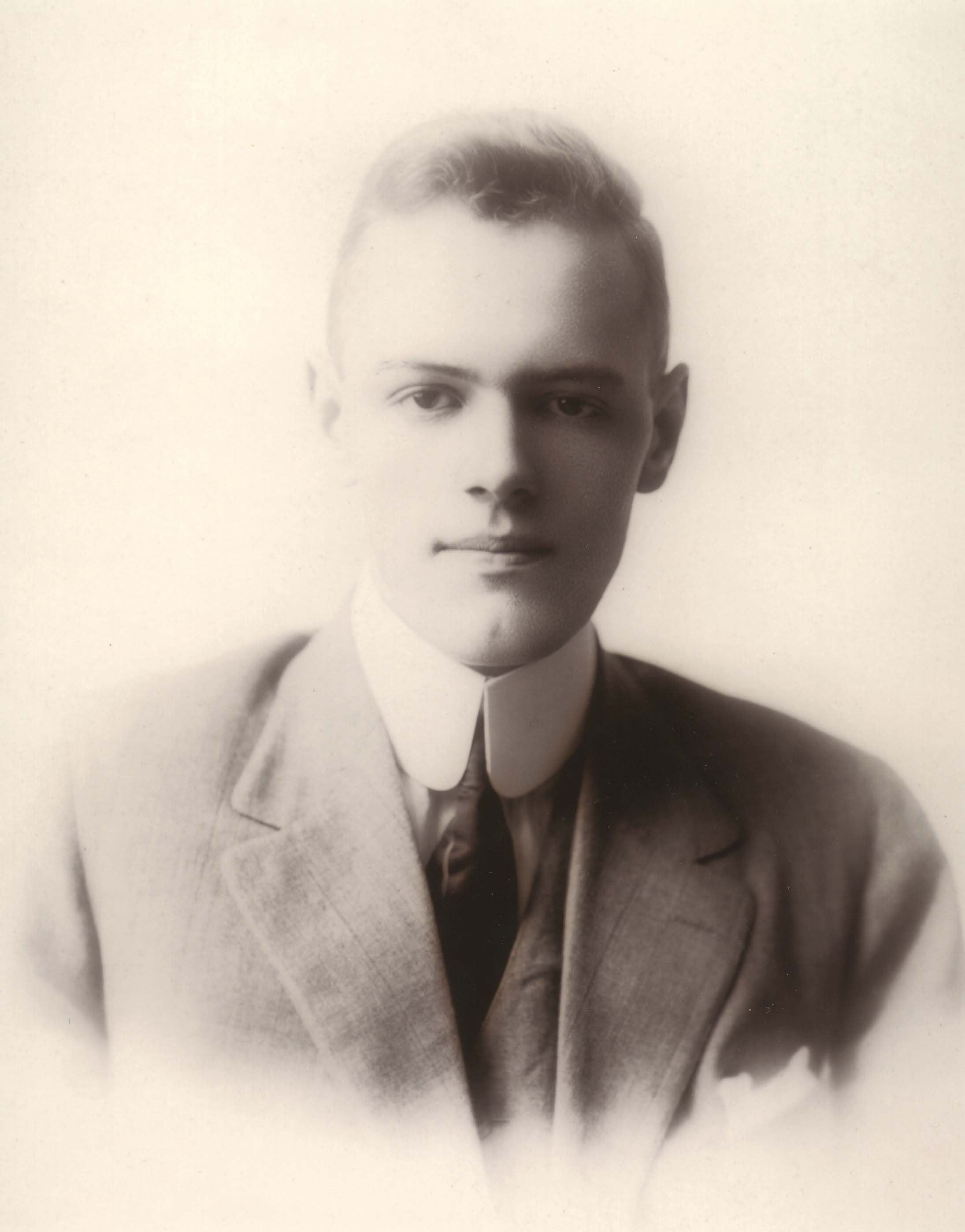
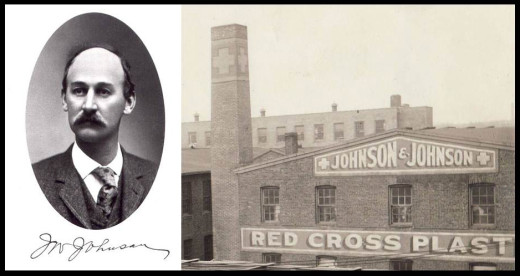
James Wood Johnson (L) and Edward Mead Johnson (R)                   

  James Wood Johnson (L) and Edward Mead Johnson (R)

So where do typewriters come in?  Edward Mead Johnson and James Wood Johnson had become interested in the new business machines industry, and they had formed a partnership with typewriter pioneer and promoter George Washington Newton Yost, whose American Writing Machine Company manufactured a typewriter called the “Caligraph.”  Yost was one of the key figures in the promotion of that new technological marvel, the typewriter, and had convinced arms and sewing machine manufacturer E. Remington & Sons, looking to diversify, to start mass producing typewriters.   In the late 1800s, typewriters came in many different shapes, sizes, and varieties, with many different methods of operation, and were as wildly innovative as smart phones are today. 

george_washington_newton_yost_flip

George Washington Newton Yost: public domain illustration from 1893, from Wikimedia Commons

The Caligraph was the first major competitor to the Remington typewriter.  This website has some great photographs of the Caligraph (which is highly valued by typewriter collectors), as well as an ad for the American Writing Machine Company in which James Wood Johnson and Edward Mead Johnson had invested their savings. 

378px-caligraph_typewriter_ad_1896

Caligraph Ad, public domain, courtesy of Wikimedia Commons

The Caligraph writing machine featured a few innovations that Yost – and the Johnson brothers – hoped would set it apart from the Remington typewriters.  It had a non-smudging ribbon with an India-rubber base, something that no doubt appealed to engineer James Wood Johnson, who had designed and built machinery at Seabury & Johnson to mass produce India-rubber based medicated plasters.  The Caligraph initially could type only capital letters, but later extra keys were added so that it could type both capital and lower case letters – using separate keys for each. 

Unfortunately for the two Johnson brothers, Yost became involved in a patent dispute with Remington over the Caligraph.  Yost’s legal battle with Remington ended the writing machine business as a viable alternative for Edward Mead Johnson and James Wood Johnson, who lost their investment and all of their savings.  They decided to return to the medical products field, where their interests and abilities were and, in 1886, they borrowed $1,000 to start Johnson & Johnson.  As soon as Robert Wood Johnson was free of his obligations, he joined his brothers, adding his business expertise, his ideas and some much needed capital.    

Johnson & Johnson office employee in 1895 -- with a typewriter!

Employee in the Johnson & Johnson office in 1895, using a typewriter.  Is this a Remington?  A Caligraph? 

Despite – or maybe because of — James Wood Johnson’s and Edward Mead Johnson’s experiment with the writing machine business, Johnson & Johnson was an early adopter of typewriters in its offices, putting them to use within a year of starting the Company.  Three quarters of a century later, Johnson & Johnson put in its first computer, with the installation of a massive IBM punch card computer in one of its facilities and distribution centers, but it wasn’t until the 1980s, a century after Johnson & Johnson started using typewriters, that the Company started to replace that old technological marvel, the typewriter, with a newer one— personal computers — in its offices.

By the way, if there are any typewriter experts out there who can identify what kind of typewriter our employee from 1895 was using, please let me know through a comment on the blog!

This post was written by Margaret

Published in: Beginnings, Did You Know?, Famous People, People | on February 19th, 2010 | 5 Comments »

Maternal and Child Health: From Booklets to text4baby

The White House just announced the launch of a new public health initiative, text4baby.  My colleague Marc at the JNJBTW blog just did a post on it.  It’s the U.S.’s first ever free mobile health service and it provides timely expert health information for pregnant women and new mothers through SMS text messages.  Johnson & Johnson is one of the founding sponsors.  In 2010, this health information is being provided in a portable, easily accessible manner through technology; 108 years ago, Johnson & Johnson provided health information to expectant and new mothers in the most easily portable technological method for 1902 – a small booklet.

Cover of Hygiene in Maternity, 1902

The booklet was called Hygiene in Maternity, and it was only 4 x 6 ½ inches, designed to be small enough to fit into a pocket or a purse so that women could carry it with them.  It was subtitled “Suggestions to mothers gathered from the experience of eminent authorities,” and lower down on the cover was the slogan for the Company’s maternal and child health campaign:  “Every child has a right to be born well.” 

The booklet opened with a chapter called “The First Things to Do.” Here’s the first sentence:  “As soon as she is aware of her condition, or has a belief as to its probability, the mother should place herself under the care of a physician of experience and reputation…”  [Hygiene in Maternity, Johnson & Johnson, 1902, p. 3]  It then went on to list some of the signs of pregnancy, how to calculate a delivery date, and some of the basic milestones in the development of the baby during pregnancy.  The booklet gave expectant mothers advice on keeping calm (women were advised not to read medical books – unless authorized by their doctors — or scary stories).  It also contained information on maintaining the mother’s general health during pregnancy, on clothing (telling women to abandon heavy, restrictive or tight-fitting clothing, such as corsets, during pregnancy), proper exercise during pregnancy, and proper rest and diet.   Getting back to the clothing advice for a moment, the booklet also gave this very good piece of practical advice for pregnant women:  “High-heeled shoes which impede locomotion and cause stumbling, are not to be worn.”  [Hygiene in Maternity, Johnson & Johnson, 1902, p. 6]

The Hygiene in Maternity booklet was surprisingly modern about exercise during pregnancy.  Here’s what it said: 

“Even up to the very day of lying-in, a healthy pregnant women will find herself benefited by exercise.  Extremely active exercise should be avoided, although such as is taken should be agreeable.  Exercise should be in the open air if possible; nothing is better than walking.”  [Hygiene in Maternity, Johnson & Johnson, 1902, p. 6]   

Although the booklet advised women to exercise appropriately during pregnancy, it told them to avoid heavy or strenuous housework.  In the era before modern appliances and conveniences, that advice that was no doubt received with great enthusiasm by the booklet’s readers.  Hygiene in Maternity went on to advocate plenty of sleep and devoted a long chapter to diet, recommending nutritious and easy to digest foods during pregnancy.

In another startlingly modern section, the 1902 booklet devoted a section to care of the teeth, stating that because women were more prone to tooth decay while pregnant, extra care should be taken to brush teeth at least twice daily and rinse the mouth with an antiseptic mouthwash.  Hygiene in Maternity quoted an old proverb current over 100 years ago, “for every child a tooth.”  The proverb referred to the conventional wisdom over 100 years ago about pregnancy leading to the loss of teeth.  The booklet explained that, using the latest medical knowledge, women could easily prevent that from happening.  It also covered morning sickness and how to alleviate some of its effects, preparations for labor, and making sure women and their doctors had “the maternity outfit” ready. 

Dr. Simpson's Maternity Packet

One of the Company’s “maternity outfits” – Dr. Simpson’s Maternity Packet

In 1902, most babies were born at home rather than in hospitals.  Starting in the late 1800s, Johnson & Johnson made maternal and child health kits, which contained everything the doctor would need to insure a safe and health delivery for mother and baby. 

The Hygiene in Maternity booklet went on to cover what to expect during labor, what the doctor and obstetric nurse should do, and why the room in which the baby was born should be made as clean as a hospital operating room to avoid any chance of post-birth infection in the mother.  (Called childbed fever throughout history, it was a major risk for women that the Company sought to eliminate through its maternal and child health kits and through education.) 

There was a chapter containing suggestions for the nurse during labor.  This chapter stressed putting the mother and baby first at all times, giving both medical and practical advice.  Once the baby was born, the Hygiene in Maternity booklet gave instructions that included how to tie the umbilical cord, clean the baby, and care for the mother.  It also included detailed instructions for care of the mother and baby in the days following delivery, advising the obstretric nurse on proper aseptic hygiene and listing the kinds of supplies and materials that would be used.    There was a section on feeding the baby – how often and how much, and on diet for the mother.  Even the back cover had important information:  illustrations showing the new parents how to properly hold their baby.

Back cover illustrations from Hygiene in Maternity

Back cover of Hygiene in Maternity, 1902

The Hygiene in Maternity booklet must have been immensely reassuring to expectant mothers because of its volume of information and advice starting with the beginning of the pregnancy to feeding and caring for the baby.   It was a portable, easy to follow handbook with advice from medical experts.

Illustration of Cooke's Maternity Packet from Hygiene in Maternity

Illustration of Dr. Cooke’s maternity kit from Hygiene in Maternity

The Hygiene in Maternity booklet and the “Every child has a right to be born well” education and information campaign grew out of the Company’s maternal and child health kits and its tradition of publishing educational materials to improve public health.  The Johnson brothers, with their emphasis on promoting antiseptic surgery to improve surgical survival rates, and Fred Kilmer, with his lifelong dedication to improving public health, saw these kits as an important way to reduce the risks associated with childbirth over 100 years ago.    

Since publishing Modern Methods of Antiseptic Wound Treatment in 1888, Johnson & Johnson used education as a way to promote not only its products, but also the latest medical and health knowledge — to improve surgical conditions, public health and the health of families.  We still do that today, but now we’re using text messages to cell phones – so that women can carry the advice and information with them wherever they go, just like they did with our booklet over 100 years ago.

This post was written by Margaret

Published in: Beginnings, Did You Know?, Public Health, Traditions | on February 5th, 2010 | 2 Comments »

Synol on Broadway!

One of the affiliate companies in the Johnson & Johnson Family of Companies is known for its tradition of using famous actresses in its advertising.  As it turns out, actresses like Jennifer Garner in the U.S. and Deepika Padukone in India are not the first celebrities to endorse our products.  Some very well-known actresses (and some actors and athletes) were also singing the praises of one of our products almost 100 years ago, in the Nineteen Teens…  The product was Synol Soap, an antiseptic soap, and famous Broadway and vaudeville actresses of the day were writing to Johnson & Johnson to tell the Company about how much they liked the product and how they used it as part of their theater routines.  

Illustration of Louise Dresser from THE RED CROSS MESSENGER

The most famous of those actresses was Louise Dresser, who appeared in 49 films and was one of the three nominees for the first-ever Academy Award for best actress for 1928.  In 1914, she was in a Broadway play called “Potash and Perlmutter” and wrote to the Company:

“ ‘Upon the recommendation of my physician, I have been using Synol Soap for the past year and have gotten so that I cannot do without it.  It is a most excellent preparation for the complexion and a wonderful mouth wash.  I have recommended it to all of my friends as an absolute necessity.’ “  [THE RED CROSS MESSENGER, Vol. VII, No. 1, June, 1914, p. 14]

In the more than slightly melodramatic style of the day, Dresser continued:

“ ‘For the sake of humanity, I would suggest that you make known to the world the benefits that can be derived from this wonderful preparation.’ ” [THE RED CROSS MESSENGER, Vol. VII, No. 1, June, 1914, p. 14]


An Issue of THE RED CROSS MESSENGER, 1914

An endorsement like that was of course way too good to pass up, so scientific director and chief publicity officer Fred Kilmer printed it in THE RED CROSS MESSENGER, the Company publication for retail pharmacists, along with the line drawing of Louise Dresser seen above.

Trixie Friganza illustration from THE RED CROSS MESSENGER

Trixie Friganza

Trixie Friganza, a leading musical comedy actress known for her many roles and her social activism, wrote: “ ‘To me Synol Soap has proved itself indispensable for its many uses.  I have used it for several years and have found that none can compare with it as a toilet necessity, and I am never without it.  Wishing you continued success in your needful venture.’ ” [THE RED CROSS MESSENGER, Vol VII, No. 2, July, 1914,  p. 38]  Besides being an actress, vaudeville headliner, and dedicated fan of Synol Soap, Trixie Friganza was also known for championing the struggle for women’s right to vote.


800px-trixiefriganza-wikimedia1

Public Domain photo of Trixie Friganza campaigning for women’s suffrage, courtesy of Wikipedia/Wikimedia Commons


Florence Reed illustration from THE RED CROSS MESSENGER

Illustration of Florence Reed from THE RED CROSS MESSENGER

Florence Reed, another well-known actress, also sent a letter to Johnson & Johnson.  She was in a very popular play during the 1914 theater season, and she, too, made the Company’s antiseptic soap a part of her backstage ritual.  She wrote:    “ ‘I have used thousands of toilet preparations in my career, but have found Synol Soap to be incomparable for the complexion, hair, scalp, and as a mouth wash.’ ”  [THE RED CROSS MESSENGER, Vol. VII, No. 1, June, 1914, p. 14]

Ms. Reed was clearly someone who believed in products that could multitask.  Synol, which had a pleasant, slightly camphory smell, was antibacterial but mild enough for people to wash their hair and faces with it, and many of the actors and actresses used it to remove their heavy theatrical makeup.  (That heavy makeup, worn daily, could wreak havoc on the complexion.)  Stella Mayhew, an actress who appeared in many musicals and vaudeville reviews, wrote to tell Johnson & Johnson the following:

“ ‘Just a line to let you know that I have used your Synol Soap for the past few months and know of no other preparation that has any of the qualities that Synol has.  It is excellent in removing makeup.’ ” [THE RED CROSS MESSENGER, Vol. VII, No. 1, June, 1914, p. 14]

Naturally, Fred Kilmer printed that excerpt from her letter in THE RED CROSS MESSENGER.


Illustration of Sam Bernard from THE RED CROSS MESSENGER

Sam Bernard used Synol Soap backstage on Broadway

It wasn’t just the women who were using Synol.  Sam Bernard, appearing in a play at the Schubert Theater, wrote to tell the Company that “ ‘Your Synol Soap has proven a splendid addition to my toilet articles.  I use it steadily and prefer it to all other such products.’ ” [THE RED CROSS MESSENGER, Vol. VII, No. 1, June, 1914, p. 14]

Valli Valli, courtesy of Wikimedia

Public domain photo of Valli Valli, courtesy of Wikipedia/Wikimedia Commons

A popular European silent film actress with the unlikely name of Valli Valli also was a fan of Synol.  She wrote in a letter to Johnson & Johnson:  “ ‘It is absolutely one of the best preparations I have ever used in my career for keeping the skin in perfect condition.’ ”   [THE RED CROSS MESSENGER, Vol. VII, No. 1, June, 1914, p. 14] 

Synol Soap

So what exactly was this product that actors and actresses of the silent film and vaudeville era couldn’t do without?  It’s another example of a product developed for doctors, surgeons and nurses that found wider use in society.  Synol Soap had been developed by Johnson & Johnson around 1900 in response to a request from physicians for an antiseptic, germ killing soap that they could use to wash their hands, disinfect instruments and clean their patients.  It came in cake form and liquid form (as shown above) in a glass bottle with a shaker top.  In the days before antibiotics, Synol was widely promoted for a variety of uses to help keep people and their families healthier.  Like all of the Company’s products, it worked well and, since Synol Soap was mild enough to be used like a regular soap, people were advised to do all kinds of things with it, from washing their hands and faces, to diluting it for use as a mouthwash, to shampooing their hair, to disinfecting their houses during spring cleaning.  It’s not surprising that actors and actresses, looking for an all-purpose reliable product to help wash their makeup off, keep their complexions clear and keep themselves healthy so they wouldn’t miss a performance, would write rave reviews about Synol Soap. 

Kilmer made these celebrity Synol testimonials a feature of two editions of THE RED CROSS MESSENGER in 1914.  In other MESSENGERS, he printed Synol Soap testimonials from professional and amateur athletes.  With the outbreak of World War I in Europe in August of that year, the articles in THE RED CROSS MESSENGER took a more serious turn.  But it’s certain that retail druggists told their starstruck Synol Soap customers that some very famous faces were using Synol Soap too…just like they were.

This post was written by Margaret

Published in: Advertising, Did You Know?, Early Products, Famous People | on January 26th, 2010 | No Comments »

100 Years Ago: A Modern Advertising Campaign

It’s January, 1910: exactly 100 years ago.  It’s the start of a new year and a new decade, and Johnson & Johnson is marking that beginning by launching a major new advertising campaign for one of its consumer products:  JOHNSON’S® Shaving Cream Soap. 

JOHNSON'S Shaving Cream Soap

The product had been introduced in the early 1900s, and was developed out of the Company’s medicated soaps that were manufactured for use by doctors, surgeons and patients.   It was it considered to be an excellent product by the consumers who used it, and it came in innovative packaging – a collapsible tube! – but it hadn’t achieved the popularity or critical mass enjoyed by some of the Company’s other products, like belladonna and kidney plasters.

Belladonna Plaster Ad

Ad for Belladonna Plasters with its well-known slogan

Feels Good On the Back ad

The Famous Feels Good on the Back ad for Kidney Plasters

Those products each had a famous advertising slogan that made its way into popular culture.  The Company was looking for similar ways to attract some attention to JOHNSON’S® Shaving Cream Soap.  So in 1909, they tried this:

Appeal for an ad slogan, 1909

Calling All Retail Pharmacists – we need a catch phrase.  Someone?  Anyone?

When that didn’t achieve the desired result, Company management decided to apply the latest developments in the growing field of advertising to the product, and conduct a “modern” advertising campaign.

In 1910, before radio and television, that would of course be a print campaign.  Fred Kilmer, our scientific director and editor of THE RED CROSS MESSENGER, announced that the target audience would be (no surprise) men who shaved their faces.  Ironically enough, that subset of the population did not include Kilmer, who wrote so extensively about and helped market the product. 

Fred Kilmer

Fred Kilmer, who probably did not use JOHNSON’S® Shaving Cream Soap on a regular basis.

Kilmer, as editor of THE RED CROSS MESSENGER, our publication for retail pharmacists, provided regular updates about the development of the advertising campaign before it launched.  THE MESSENGER printed articles talking about plans for the campaign, how it would roll out, and how retail pharmacists could participate.

Here’s what Fred Kilmer reported:

“The advertising will run continuously and the space used will be full pages and half pages and prominent locations; in certain instances the advertisements will appear in colors.”  [THE RED CROSS MESSENGER, Vol. II, No. 7, December, 1909,  p. 314]

The ambitious advertising campaign was set to appear in the hugely popular Scribner’s Magazine, to take advantage of former President Theodore Roosevelt’s series of articles appearing in the publication.  System, a magazine targeted to businessmen, was also going to run the ads, as would the Sunday magazine sections of some of the major U.S. newspapers, the Literary Digest, Harper’s Weekly, The Saturday Evening Post and Collier’s, a popular magazine of the era.  Not to miss an opportunity to reach men who needed to shave, the ad campaign also included magazines for military officers, a magazine called Everybody’s Magazine (despite the title, it was chosen because of its large male audience, and it focused on investigative journalism) and The American Review of Reviews.   The ads offered a free trial tube of JOHNSON’S® Shaving Cream Soap to anyone who wanted to try it.  Interested customers would then be directed to the retail pharmacy nearest to them that carried the product.   Kilmer estimated that the campaign would bring an estimated two million new customers into retail pharmacies.  Needless to say, pharmacists were eager to participate.   Kilmer urged them to cut out the full-page magazine ads and exhibit them in their store windows, in order to draw people in. 

Saturday Evening Post ad for Shaving Cream Soap

One of the Saturday Evening Post ads

The modern ad campaign was created by the J. Walter Thompson Company of New York, continuing the relationship that started when James Walter Thompson himself started working with founder Robert Wood Johnson on the Company’s advertising.  The ads were designed to be informative and convincing, and used techniques that Thompson pioneered, such as the more sophisticated use of product testimonials. 

1919 Shaving Cream Soap Ad

An ad from 1919 using the more modern techniques

According to Fred Kilmer, the J. Walter Thompson agency’s mission was nothing less than the following:

“They will undertake and expect to succeed in placing the merits of Johnson’s Shaving Cream Soap before every man in the United States who has need for it.  It will be their work to send customers to the drug store, and to keep them going.”  [THE RED CROSS MESSENGER, Vol. II, No. 7, December, 1909,  p. 314]

Besides the magazine ads, there would also be a large number of displays, product booklets and other materials for the drugstores selling the product. 

Drugstore Ad for Shaving Cream Soap

Example of an in-store drugstore advertisement

So why would retail druggists care about the plans for the ad campaign?  Because as Kilmer explained, it wasn’t just designed to sell more JOHNSON’S® Shaving Cream Soap (although that was its primary goal).  It was also designed to get more people into the retail drug stores who sold the Shaving Cream Soap, thus increasing the druggists’ overall business.  So if druggists sold or decided to start carrying the product, they were able to participate in a campaign that had as its secondary goal increasing their business. If you were a retail druggist in 1910, you had to be excited by that.  It was another example of the close and cooperative relationship between the Company and its customers, which dated back to the founding of Johnson & Johnson, and would later find expression in the first paragraph of Our Credo

Letters from Consumers from Shaving Cream Soap Ad Campaign

One day’s worth of letters — 3179 of them — requesting the free sample from the ad campaign

The modern ad campaign was a success, and spurred thousands of letters requesting the free samples from men eager to try the product.  In later years, customer testimonials to JOHNSON’S® Shaving Cream Soap would continue to be used in ads for the product, and be reprinted in THE RED CROSS MESSENGER.   The product never did get a slogan that made it into popular culture, though.

This post was written by Margaret

Published in: Advertising, Early Products, Events | on January 15th, 2010 | 1 Comment »

1959: McNeil Laboratories Joins the Family

McNeil Pharmacy

The Origins of our McNeil Business – the Mc Neil Family Pharmacy

Retail pharmacies have been important in Johnson & Johnson history for a number of reasons.  Before the days of supermarkets, they were the places that sold our products to consumers – from medicated plasters to Lister’s Dog Soap to JOHNSON’S® Baby Powder to BAND-AID® Brand Adhesive Bandages.  But retail pharmacies are also a big part of our history in another way:  if it hadn’t been for them, Johnson & Johnson – and some of its operating companies – might not be here at all.  Why is that?  Because their founders all got their start as clerks in retail pharmacies, which gave them a lifelong interest in health care.  Company founder Robert Wood Johnson the first and Revra DePuy are two examples.  A third example is the former McNeil Laboratories, which joined the Johnson & Johnson Family of Companies 50 years ago this year, and helped establish one of one of the Company’s three business segments.

In the 1950s, the Johnson & Johnson Family of Companies was primarily centered around consumer products and hospital products (those included sutures, dressings and dental products).  The Company also had what it called “commercial products” like non-woven fabrics that were sold to be used in industry, and other products such as tapes (duct tape among them!).   In the late 1950s, the Company’s senior management concluded that in order for the Johnson & Johnson Family of Companies to continue to grow and evolve with the evolution of health care, it should expand into pharmaceutical medicines…and they started looking for a company they could acquire.  Strangely enough, General Johnson, who was usually so farsighted, initially resisted.  His resistance was due to worry that the culture of Johnson & Johnson – the emphasis on Our Credo and on responsibility to others – could be diluted by acquiring and absorbing another organization.  So the Company’s senior management began to look around for a company that not only made pharmaceutical medicines, but that had a similar value system.

The Company already had a small presence in the pharmaceutical area with the Ortho Research Foundation, starting in the 1930s.  It had led to an affiliate company managed at the time by Philip Hofmann (who would go on to succeed General Johnson as chairman and CEO of Johnson & Johnson in 1963).  Hofmann and others pointed to the success of the Ortho Research Foundation’s past director, Dr. Philip Levine, who had discovered the human Rh blood factor – a huge breakthrough that would eventually lead to RhoGAM®, the product that, decades later, is still the treatment for hemolytic disease of the newborn.  Finally, General Johnson agreed to go along with an acquisition, provided it was a good fit with the culture and values of Johnson & Johnson.

McNeil Pharmacy, 1900

In 1959, the Company’s management found what they were looking for and acquired McNeil Laboratories Inc., a successful business that had started seven years before Johnson & Johnson was founded.  In 1959 McNeil was still family run company, specializing in medicines for sedation and muscle-relaxants.  Its most famous product would go over the counter just a year later.

McNeil's Pharmacy Interior

Interior, McNeil’s Pharmacy

The McNeil family business dates back to March 17, 1879, when Robert McNeil, a 23 year old recent graduate of the Philadelphia College of Pharmacy and Science, bought (what else?) a retail drugstore in the Kensington section of Philadelphia for the small fortune of $167.  McNeil’s drugstore came with furnishings, an inventory of medicines and a soda fountain, a popular addition to pharmacies since the 1850s.  (Interestingly enough, soda fountains were originally installed strictly for medicinal purposes, and their original carbonated tonic concoctions – before they morphed into harmless places to get a soft drink — would be considered quite alarming today.)

McNeil Pharmacy Bottle

A bottle from the McNeil family pharmacy, with “McNeil” embossed on the side of the glass

The McNeil drugstore did well, and by the time McNeil’s son, Robert Lincoln McNeil, took over, it had added a small manufacturing laboratory and doctors’ supply business. In 1914 both McNeils – father and son – formed a partnership called the Firm of Robert McNeil.  For eleven years they ran it as both a retail store and a manufacturing operation, but the manufacturing side did so well that in 1925, the McNeils discontinued the retail part.  In 1933, they incorporated their business as McNeil Laboratories, Inc., and in 1955,   Robert Lincoln McNeil retired and his sons took over the business.  Just four years later, the brothers and their historic business would join the Johnson & Johnson Family of Companies.

McNeil Family and Architect

Robert Lincoln McNeil (center) and his son Henry McNeil (left) talk to an architect during construction at Fort Washington, PA

With the 1959 acquisition, the two McNeil brothers joined the Johnson & Johnson Board of Directors:  Robert McNeil:

Robert McNeil, 1959

Robert McNeil

And Henry McNeil:

Henry McNeil, 1959

Henry McNeil

Here’s what the Johnson & Johnson Bulletin said in February, 1959:

“The acquisition of McNeil is recognized as an important step in Johnson & Johnson’s long-term program for the development and marketing of medicinal, surgical, and diagnostic products for the medical profession.  McNeil’s fine management team has built research, manufacturing, and marketing organizations which greatly strengthen and complement the Johnson & Johnson corporate family.”  [Johnson & Johnson Bulletin, February, 1959, p. 7]

Early TYLENOL® (acetaminphen) products

Early Examples of McNeil Laboratories’ Most Famous Product

That same year, the Company also acquired Cilag Chemie, a small Swiss pharmaceutical company.  And just two years later in 1961, to further strengthen its presence in this new business area, Johnson & Johnson would acquire a small Belgian firm led by one of the most creative and prolific research scientists of the 20th century: Dr. Paul Janssen.

The precedent of only acquiring companies with value systems compatible with Our Credo still remains in place today.  It’s one of the traditions started by bringing in the McNeil family’s historic business 50 years ago this year.

This post was written by Margaret

Published in: Anniversaries, Beginnings, Events, Milestones | on December 16th, 2009 | 6 Comments »

Behind the Scenes of Our History

Here’s another special behind the scenes video tour of some lesser known items from Johnson & Johnson history.  If you’ve ever wondered where the last loading dock for horse drawn wagons at Johnson & Johnson is located, which unusual 1960s fashion was made by one of our operating companies, why we once made doll clothing, and how we got from medicated plasters to JOHNSON’S® Baby Powder, you’ll know the answers to all of those questions after you watch this post.   You’ll also be able to see — for the first time — letters from two of our founders written in 1887, just a year after the Company was founded.  Enjoy!


This post was written by Margaret

Published in: Did You Know?, Early Products, New Brunswick, Unusual Products, Video Posts | on December 4th, 2009 | 10 Comments »

Wonderful Mother

Some of the most beautiful and appealing ads in the history of the Johnson & Johnson Family of Companies are the historical ads for JOHNSON’S® Baby Powder.  One of the most popular of those ads – and still a favorite today — is the Wonderful Mother ad from 1922.  But did you know that the ad was inspired by Abraham Lincoln?  Read on to find out why.

Wonderful Mother Ad, 1922

The Wonderful Mother ad appeared in the leading magazines of its day, such as Women’s Home Companion.  The centerpiece of the ad is a beautiful illustration of a mother looking down at her sleeping baby.  Her arm is protectively around her other child.  The ad conveys nurturing, trust and comfort, and perfectly captures the parent-child bond and the love between the mother and her children.   

So what did all of that have to do with Abraham Lincoln


Abraham Lincoln

Abraham Lincoln, Sixteenth President of the United States…and the inspiration behind one of our most popular ads.

Believe it or not, the title of the ad and the inspiration behind the text comes from a quote from Lincoln, which is reproduced in the body of the ad:   “‘I had a wonderful mother, said Lincoln. ‘All that I am, I owe to her.’” 

Here’s a close up of the text:

Wonderful Mother Ad, 1922 closeup of text

The ad begins by talking about how parents can help shape their children’s futures, mentions the ways in which the product could help mothers soothe their babies so they can get the sleep they need, and finishes by bringing in another theme that ran through the Company’s advertising from the very beginning:  the scientific basis, reliability and trustworthiness of the Company’s products. 

A small paragraph on the left side of the ad (as it appeared in magazines) mentioned a new Baby Gift Box that contained the three baby products we made in 1922:  JOHNSON’S® Baby Powder, JOHNSON’S® Baby Cream and JOHNSON’S® Baby Soap.  The paragraph on the lower right, under the baby powder tin, was a shout-out to the retail pharmacists who sold our products to the public at that time, in the days before supermarkets became widespread.

Wonderful Mother ad, 1922:  paragraph about retail pharmacists.
Closeup of Your Druggist is More Than a Merchant paragraph of the 1922 Wonderful Mother ad

This was a reference to a national public awareness campaign the Company initiated that talked about the important role of the retail pharmacist as a trusted, ethical expert who could help people with their own and their family’s health.  It was done to give a boost to community retail pharmacists, in the face of the growing impact of the popularity of the automobile – which let people travel farther to shop.  (The campaign was thought up by Scientific Director Fred Kilmer, himself a former retail pharmacist.)

The Wonderful Mother ad was such an all-time favorite that, approximately 70 years later, our consumer operating company brought it back. 

Wonderful Mother Ad Remake

Wonderful Mother ad circa 1990

The mother and little girl in the new Wonderful Mother ad have updated clothing and hairstyles, but the basic image is the same.  They’re in the same pose, and they’re dressed in just about the same colors as their 1922 counterparts.  The orange and white baby powder tin from 1922 is now the more modern white container of the late 1980s/early1990s.  Looking at the two ads together really gives you a sense of the history of JOHNSON’S® Baby Powder (since 1893!) and the multiple generations of parents and children it has touched.


Wonderful Mother Ad, 1922         Wonderful Mother Ad Remake

This post was written by Margaret

Published in: Advertising, Iconic Products, Traditions | on November 20th, 2009 | 6 Comments »

The Incredible 30 Year Ad

What Johnson & Johnson ad was so popular that people were inspired to make their own versions of it?  Hint:  the ad ran for an incredible 30 years and, when the Company tried to update it, consumers protested.  Here’s another hint:  the ad contained one of our most memorable advertising slogans, and it advertised a product that most people today have never heard of.

Feels Good on the Back ad

The Ad that Launched a Thousand Tributes

The ad was for RED CROSS® Kidney Plasters, and the tagline was “Feels Good on the Back.”  RED CROSS® Kidney Plasters were one of the Company’s most popular medicated plasters, and they provided pain relief for abdominal and lower back pain.  They got their name because they were kidney-shaped and were worn low on the back – over the kidneys. 

Kidney Plaster

An actual kidney plaster, with its distinctive kidney shape

The Feels Good on the Back ad made its debut around 1889-1890 and immediately became a hit with the public.  The image of the couple sitting on a beach watching the waves come in, with the man’s arm around the woman’s waist, really resonated with people.  And when you look closely at the ad, that’s no surprise:  the image, with its tagline “Feels Good on the Back” appealed to people because it wasn’t about kidney plasters.  It was really about human connections and human touch.  The phrase certainly applied to the therapeutic effects of a kidney plaster, but when accompanied by the illustration, it also highlighted the soothing and comforting effects of touch – something that the Company also brought out in its baby products advertising, and which continues to be a focus in many of our ads today. 

The Feels Good on the Bacl couple

The couple was facing away from the viewer, which only added to the appeal.  Since viewers couldn’t see their faces, people could substitute themselves for the couple in the ad peacefully watching the ocean – sort of a late 19th century zen moment.  (Actually, blog readers might want to take a moment and try doing that right now:  it actually works, and you’ll get a few seconds of calm, peacefulness and comfort.  You can practically hear the waves and feel the sun.) 

1916 Kidney Plasters Drugstore window display

1916 Drugstore Window Display

Johnson & Johnson was inundated with requests for the ad, and poster-sized copies were soon displayed in thousands of drugstore windows.  During World War I, the image and theme were used a number of times to illustrate support for the men and women serving in the armed forces. 

Liberty Loan Cartoon 1918

A 1918 U.S. Liberty Loan Campaign featured this cartoon homage to the Feels Good on the Back ad.  Lady Liberty has her arm around a soldier.

People took the Feels Good on the Back ad so much to heart that many of them felt compelled to produce their own versions, which they sent to Johnson & Johnson.  Fred Kilmer, who edited the Company publications, reprinted these efforts in THE RED CROSS MESSENGER, the publication for retail pharmacists.  (Since I’m blogging, I feel compelled to point out that the consumer artwork in our publication around 100 years ago was an early example of user-generated content!)  Here are some of the public’s efforts that were reprinted in the MESSENGERS.

A couple in Philadelphia, PA  re-enacts the ad for “Anybody’s Magazine in 1911.

fgodb-illustration-2

Drawing inspired by the Feels Good on the Back ad

Another drawing — this one with a little bit of humor added to the scene


Even the Company got into the act.  This one appeared on the cover of the January, 1917  edition of THE RED CROSS MESSENGER.

The Feels Good on the Back ad ran unchanged for an astounding 30 years.  At one point, the Company tried to update the woman’s outfit, causing a flood of protests from consumers who wanted the ad kept exactly as it was.  Here’s what Fred Kilmer said: 

“…she had become a favorite in many lands.  The whole world had grown to know her as a friend and to manifest an interest in her love affair.  And her friends simply wouldn’t permit her to wear anything but those simple old-fashioned clothes.  They protested vehemently.  So for thirty years she has snapped her fingers at Dame Fashion.”   [THE RED CROSS MESSENGER, Vol. XII, No. 4, 1919,  p. 93]

The Company very wisely decided not to go through with the update.   And even though the product advertised by the couple in the ad is from a much earlier time in our history, their image still connects with people today because of the universal feelings it appeals to. 
 
In my next post, I’ll talk about an ad from 1922 that was so popular that the Company brought it back over half a century later.

This post was written by Margaret

Published in: Advertising, Did You Know?, Early Products | on November 16th, 2009 | 8 Comments »

Are You Tough Enough for the Aseptic Room?

Johnson & Johnson Aseptic Dressing Label 1899 

Regular readers of Kilmer House have read about the aseptic, or sterile conditions that Johnson & Johnson maintained over 100 years ago in order to manufacture the first mass produced sterile surgical dressings and sterile sutures.  So I thought it would be interesting to post some of the rules for our Aseptic Department from 1897:  112 years ago.

Aseptic Department Rules, 1897

You Can’t Do That!  A list of what not to do from 1897

Don’t allow a dressing to touch your person or clothing, unprepared tables, tools or apparatus.
Don’t touch any other person.
Don’t touch a dressing with hands that are not surgically clean.
Don’t, while handling dressings, touch your hands to your clothing, face, hair, eyes or mouth.
Don’t allow perspiration to drop on tables or dressings [Remember, this was before air conditioning!]
Don’t cough or sneeze over the dressings or tables.
Don’t carry or use a pocket handkerchief.
Don’t put anything in your mouth.
Don’t wear flowers, ornaments, jewelry or rings. [In case you’re wondering about this rule, many or most of the Aseptic Department employees were women.]
Don’t pick up any dressing or thing that has fallen to the floor.
Don’t use anything that has fallen to the floor without sterilizing it.
Don’t fail to have everything surgically clean before you use it.
Don’t touch anything that has not been made sterile without rewashing the hands.
Don’t be afraid to wash your hands often; they will not wash away.
Don’t allow persons who have not prepared themselves to touch a dressing or anything used in their preparation.
Don’t go out of the room and come back again without as thoroughly rewashing as when you first entered.
Don’t be afraid to be particular about everything you do or touch.
Don’t handle anything when it is not necessary to do so. 

[Aseptic Dressings, Rules and Suggestions, Johnson & Johnson, late 1800s]


Aseptic Department 1903

The Aseptic Department in 1903.  Many of the employees in this most crucial and exacting department were women.  In 1908, this included Nora H——, the Aseptic Department supervisor.

Sterilizer 1897

One of the Sterilizers, 1897

Here’s a 1908 description of the Company’s aseptic manufacturing facilities.  The antiseptic laboratory contained a steam sterilizer, a sterilization method pioneered by Johnson & Johnson.   It was connected with the aseptic finishing room which, according to scientific director Fred Kilmer (who oversaw the creation of these rooms) was “…the outcome of years of study in the preparation of surgical material.”  [RED CROSS NOTES, Series VI, No. 6, New Brunswick, NJ  1908, p. 127]  Plate glass (which could easily be kept germ free) formed the partitions for this room.  The floor was made from hard wood, and the walls and woodwork were covered in smooth white enamel, as was the metal ceiling.  The tables were enameled metal with glass tops so they could be disinfected. 

Aseptic Room Employees

A corner of the Aseptic Department – you can see the glass topped enamel table

Here’s a further description:

“The walls and ceiling are glass smooth.  The floors are filled and polished.  There are no closets or shelving, no cracks or crevices to harbor dust or dirt.  The furniture consists of glass-topped tables on iron frames, which allow effectual and easy cleaning.  Everything, whatsoever may be its nature or history, outside of this room, is considered as infected (though in fact it may be free from germ life); it is, therefore, disinfected before being taken into the room.  The entrance to this room is through an anteroom, which is a disinfecting station of the highest type.  Through this quarantine all persons and things pass before entering the aseptic room.  The inanimate objects pass through the sterilizer elsewhere described.  The operatives undergo a vigorous personal cleansing and change of clothing.”  [Asepsis Secundum Artem, Johnson & Johnson, New Brunswick, NJ, 1897, pp. 6-7] 

“Materials pass in and out of this room through a locking system that at once keeps out all dust and infection.  The air of the room is filtered through cotton under pressure.  Thus there is formed a perfect protective against dust and infection from without.  The room is without apparatus or furniture, except for the necessary bowls for hand washing and for the care of washable uniforms, and white glass tables resting on enameled iron…”  [RED CROSS NOTES, Series VI, No. 6, New Brunswick, NJ  1908, p. 127] 

sinks

Aseptic Department Sinks

Aseptic Department employees had to wash their hands, arms and faces with antibacterial soap, and change into sterilized uniforms and caps before starting work.  Employees from other departments and messengers were not allowed into the aseptic room, and visitors were only admitted by special permission of the office (which meant, most likely, that you had to gather up your courage and get your request okayed by Company founder Robert Wood Johnson), and only when under the direct supervision of the nurse in charge of the room.  Visitors couldn’t “mingle with the operatives,” or employees, in the room and they weren’t allowed to touch anything.  After each day’s work had concluded, all dressing materials and finished dressings were put away and a thorough cleaning was done.  Clothing and other smaller items were sterilized in the big steam sterilizer.  Tables, floors and other big things were dusted with a wet cloth, washed with antiseptic solution and then the entire room was closed and fumigated with sulfur and steam.

List of Training Course Work and Reading Materials for Aseptic Department

List of training course work and reading materials for Aseptic Department employees, 1897

So if you just followed all of those rules, you’d be all set to work in the Aseptic Department, right?  Wrong.  Employees involved in the making of the Company’s surgical dressings had to successfully pass a training course that included studying academic medical and scientific texts and reference books, answering questions and conducting experiments that educated them about the importance of preparing sterile surgical materials, the nature of the materials used in dressings and their preparation, how the dressings were used in surgery, how bacteria grew and multiplied, infection and disinfection, sterilization and aseptic techniques in the preparation of surgical dressings, and more.  Fred Kilmer noted that the aseptic rooms were at all times under the direct supervision of graduate surgical nurses, and employees had to scrub in like modern surgeons every time they entered the aseptic room. 

Aseptic Dressing Seal 1899

Aseptic Dressing Package Seal Signed by one of the Graduate Nurses, Elizabeth W——.


Illustration of Aseptic Room employee washing hands from 1897 Asepsis Secundum Artem (“According to the Art of Asepsis.”)

This detailed training and the Company’s strict requirements for manufacturing sterile dressings and sutures were in place at a time when many surgeons were still operating in their germ-covered street clothes, and Johnson & Johnson was rightly proud of its aseptic program, having pioneered these early clean room techniques. 

The reason that Johnson & Johnson gave for taking such painstaking steps was that the dressings had to be perfect because lives depended on them, a responsibility the Aseptic Department employees took very seriously.  As Fred Kilmer wrote in 1897, “The importance of the surgical dressing, the nature of its requirements, call for the greatest care.”  [Asepsis Secundum Artem, Johnson & Johnson, New Brunswick, NJ, 1897, p 16] 

You can still see one of the legacies of the Aseptic Department today, in the light, open design of buildings and interior spaces in the Johnson & Johnson Family of Companies throughout the world.  The emphasis on bright white clean surfaces was absorbed by the future General Robert Wood Johnson and incorporated into our building designs worldwide…a very old tradition that we still follow to this day, over a hundred years later.

Aseptic Department

Then:  white enamel and walls with lots of light…


Now:  white buildings with lots of light

This post was written by Margaret

Published in: Beginnings, Early Science & Tech, Employees, Traditions | on October 30th, 2009 | No Comments »

The Transcontinental Dinner

Today we take new technologies like high-tech videoconferencing, instant messaging, Twitter and video chats for granted.  But that wasn’t always the case.  Ninety-three years ago (on May 29th, 1916, to be exact), Johnson & Johnson took part in a demonstration of the latest cutting-edge technology:  the opening of the first transcontinental telephone line opened between New Brunswick, New Jersey and San Francisco, California.  The demonstration was such a big deal that it was held at a special Transcontinental Dinner at one of the leading hotels in New Brunswick, New Jersey. 

Hotel Klein

The Hotel Klein, Courtesy of Ken Lew’s online postcard collection

The demonstration of the new American Telephone and Telegraph Co. transcontinental line was organized by the New Brunswick Board of Trade, with the cooperation of Johnson & Johnson.  Since it was one of New Brunswick’s leading industries, and it had sales offices in San Francisco, Johnson & Johnson was chosen to participate in the event, while leading citizens “listened in” to the conversations, as Scientific Director Fred Kilmer put it, using a term so new that it was in quotation marks.  [THE RED CROSS MESSENGER, Vol. IX, No. 1, September, 1916, p. 25]


James Wood Johnson

James Wood Johnson was on the New Brunswick side of the call.

Among those representing the Company were President James Wood Johnson, and — in his first public appearance representing Johnson & Johnson — Robert Wood Johnson, who was 23 years old and had become a department head the previous year. 

Robert Wood Johnson

Robert Wood Johnson was also on the call.

There were 200 attendees, including New Brunswick mayor (and Robert’s close friend) Edward F. Farrington, and Rutgers president William Demarest – who had attended the Rutgers Grammar School (Now Rutgers Prep) as a child, graduated from Rutgers College as a student, and was now its president.

The Hotel Klein Dining Room

The dining room in the Hotel Klein, courtesy of Ken Lew’s online postcard collection

The tables at the Hotel Klein were outfitted with individual telephone receivers for each of the guests.  Attendees listened to local dignitaries and sat through a talk on “preparedness” by a leading speaker of the day.  Shortly after 9:00 p.m. New Brunswick time, when the speeches were concluded, the attendees picked up their receivers and put them to their ears.  There was a roll call of wire chiefs from Pittsburgh to Chicago to Omaha to Denver to Salt Lake City and on until the connection finally reached San Francisco at 6:14 pm. 

Candlestick Telephone

A Candlestick Telephone  – the kind of phone that would have been used at the dinner

The new transcontinental connection was crystal clear.  Fred Kilmer was amazed that the participants didn’t have to shout into the telephones to be heard all the way across the country:

“Those who talked over the telephone did not raise their voices above the usual conversational pitch, and the replies came back from across the continent clear and instantaneous.  There was no more effort, delay or indistinctness than in talking across a table.”  [THE RED CROSS MESSENGER, Vol. IX, No. 1, September, 1916, p. 25]

For the next hour, greetings were exchanged between the two cities.  Robert Wood Johnson had been chosen as one of the greeters, and he spoke with the Company’s San Francisco sales agent H. D. Dietrich, of Waldron & Dietrich fame.  Unlike the New Brunswick gathering, which was made up only of men, Mrs. Waldron and Mrs. Dietrich attended on the San Francisco side.

H. D. Dietrich

H. D. Dietrich, of Waldron & Dietrich, was on the San Francisco side of the call


The attendees in New Brunswick marveled at the new technological achievement.  Here’s what Fred Kilmer said:

“When Mr. James W. Johnson, president of Johnson & Johnson, at the New Brunswick end of the line, talked with Mr. H. D. Dietrich, at the San Francisco end, the most blasé of business men at the tables felt something akin to uncanniness at the thought that his voice had gone across thirteen states, shot over prairies and through forests, hurtled through cities, climbed the Rockies, skimmed across the desert and reached the Pacific coast, and the answer had come back in an eye-wink.”  [THE RED CROSS MESSENGER, Vol. IX, No. 1, September, 1916, p. 25]

After the greetings were over, the attendees in San Francisco sent the sound of the Pacific Ocean eastward, from a transmitter placed on Seal Rocks.  New Brunswick, having no natural water resource that was loud enough to be heard easily over a transcontinental phone line, did the next best thing and responded by singing On the Banks of the Old Raritan.”  (Rutgers alumni, of course, STILL know that song by heart…but did you know it originally had five verses, not two?) 

Victrola

A Victrola 

San Francisco followed that by transmitting the sound of a Victrola playing “Little Grey Home in the West” and, after taking that in, the dinner guests in New Brunswick finished the evening by enthusiastically singing the following:

“Good Night, Frisco!
Farewell, Frisco!
So long, Frisco!
We’re going to leave you now.
We’ll annex you by and by,
Do not sigh!  Don’t you cry!
We’ll annex you by and by,
Although we leave you now.”

With that, the Transcontinental banquet attendees on both coasts, New Brunswick and San Francisco, signed off and hung up their telephones.  Interestingly enough, transcontinental dinners seemed to be a bit of a mini-trend in 1916, with MIT and the National Geographic Society hosting them as well.  The MIT dinner guests included Thomas Edison, Alexander Graham Bell (inventor of the telephone) and airplane inventor Orville Wright. (The MIT gathering was not necessarily the most academic or high-minded of the transcontinental dinners: they sang a song about drinking beer as their sign-off.)   Here’s a partial transcript of the National Geographic Society’s 1916 Transcontinental Dinner, in case anyone is curious as to exactly how these things went.

 Johnson & Johnson, 1916

Johnson & Johnson Circa 1916 — Now Just a Transcontinental Telephone Call Away

So, why was this such a big deal for Johnson & Johnson?  Because the New Brunswick, New Jersey office was now within voice distance of the Company’s San Francisco office – the U.S. office that was the furthest away.  This meant that all of the branch offices of Johnson & Johnson were now in voice contact with the home office.  That gave Johnson & Johnson the ability respond more quickly to customer requests and questions, it put the sales offices and sales agents in closer and more immediate touch with New Brunswick, and made it possible for the Company to get its products where they were most needed far more rapidly.  Before the transcontinental line was completed, communication was either by letter (which was slow) or by telegraph – which had to be brief and not very detailed.  Just ten years earlier, after the devastating 1906 San Francisco earthquake and fire, Waldron & Deitrich, the Company’s west coast sales agents, had received special permission to telegraph an urgent appeal for medical supplies from San Francisco to Johnson & Johnson in New Brunswick; just a short ten years later, through the marvels of modern technology, Waldron & Dietrich and New Brunswick were now in speaking distance.

This post was written by Margaret

Published in: Did You Know?, Events, Milestones, New Brunswick | on October 20th, 2009 | 2 Comments »